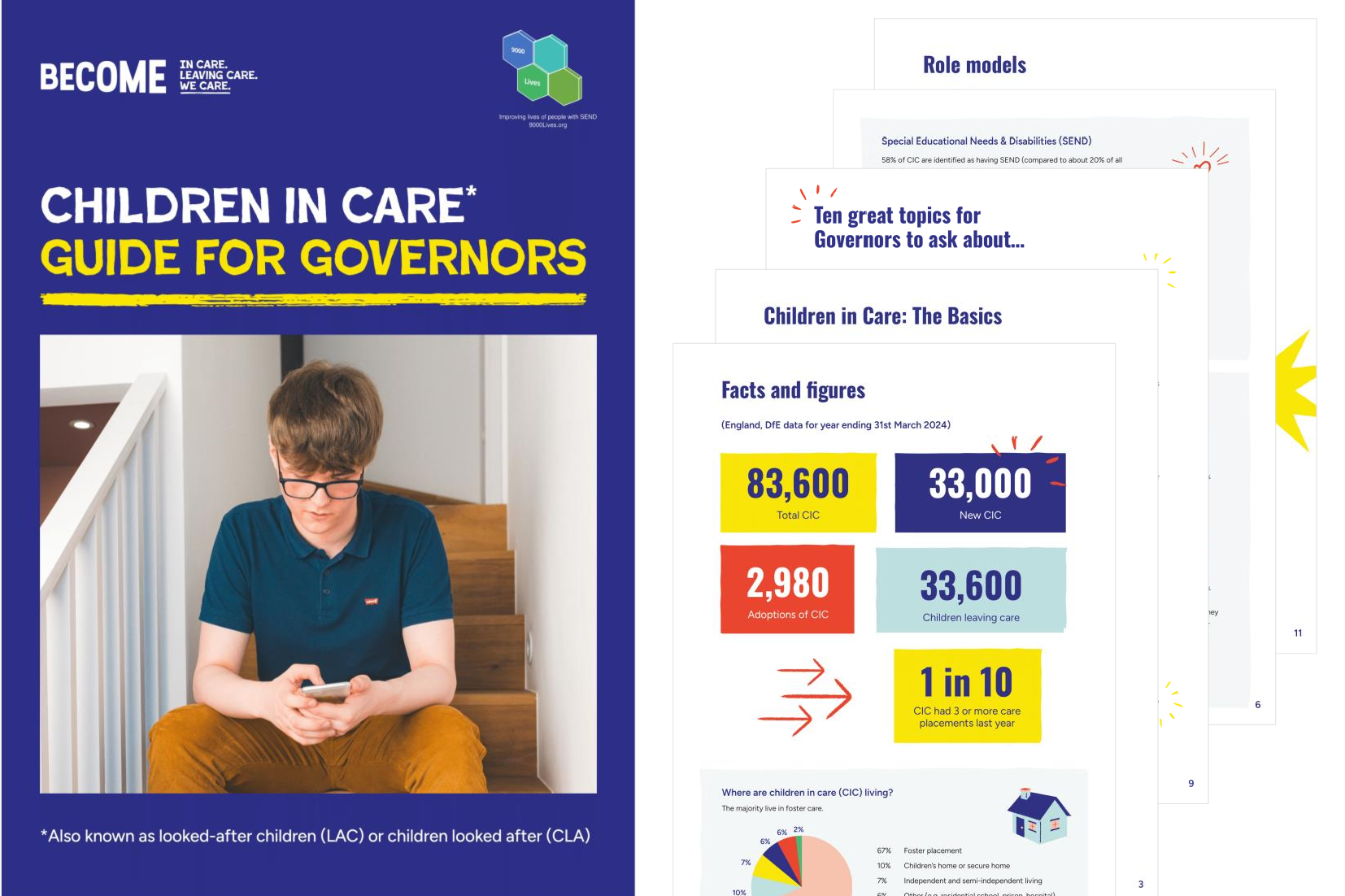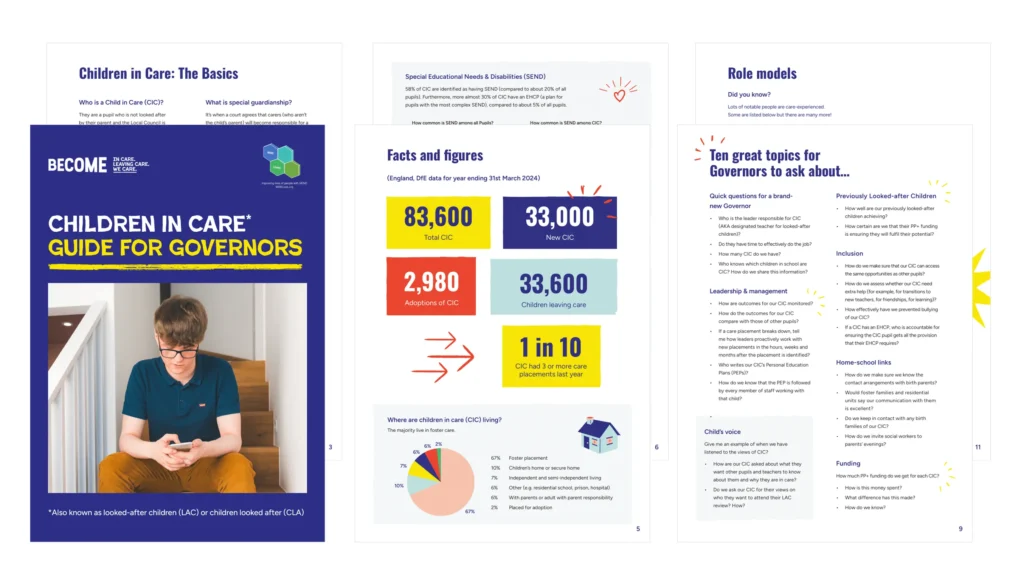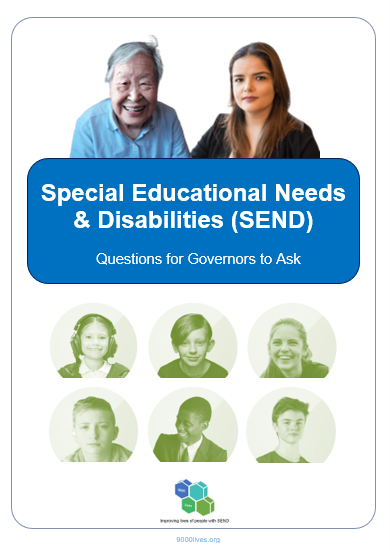
On this page, you’ll find the Children in Care: Guide for School Governors, created by Become and 9000 Lives.
* A note on terminology: We use the term ‘children in care’ (or CIC for short). However, these same pupils are sometimes described as Looked after Children (LAC) or Children Looked After (CLA). Whichever term you use, this is the right page for you.
What is the Children in Care: Guide for School Governors?
It’s a short handbook that tells you what you need to know about CIC. It explains the basics quickly and clearly, as well as giving sensible questions for governors to ask.
Full of the latest knowledge from a both national charity and local school perspectives, it is applies to early years classes up to Year 13.
Lots of jargon. But when it does have jargon, it is simply explained.
One thing that gets in the way of your knowledge of the care system is information that’s cluttered with specialist terms or legal jargon. The guide gives direct and straightforward information: Key facts without jibber-jabber.
Who wrote it?
It was written by Aaron King & Become.
Aaron has spent around 20 years on governing bodies and even longer working with vulnerable children and families in schools – especially those with SEND.
Become are the national charity for children in care & care leavers. Since 1992, Become have been working hard to:
Provide advice and support
Help guide the lives of CIC & care leavers
Influence policy
Train professionals who work with CIC.
Become practice what they preach (that we should have no limits on what can be achieved by our CIC). For example, 50% of their trustees have first-hand experience of care. Check out their website becomecharity.org.uk.
We asked carers, staff, care experienced people and governors for feedback and listened to their feedback to make the booklet even better. Thanks to all those who gave opinions, especially Tracy, Sarah, Jill and Amy.
Why did we write this CIC guide?
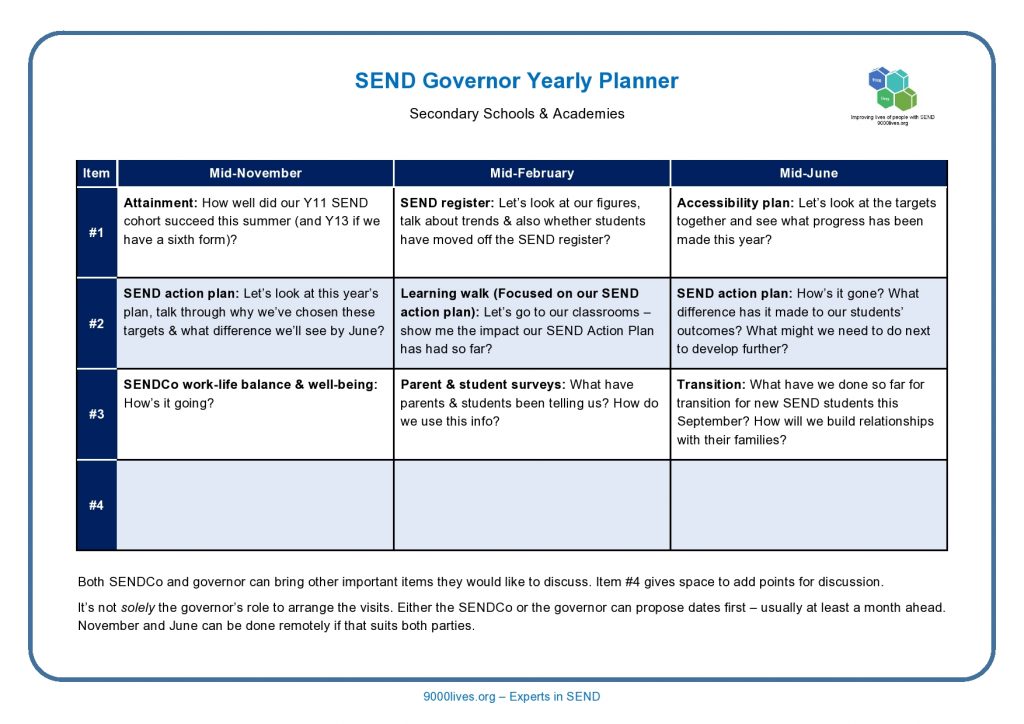
School governors sometimes take on extra duties called link governors. There was a new link governor at one school and we wanted to help them with their link governor role for Children in Care.
We couldn’t find what we needed to get them off to a flying start. So we rolled up our sleeves and wrote it.
No. However, CIC are often part of the Safeguarding Governor role (and the DfE guidance (KCSIE, 2025) says that your school must have one of those).
Typically, it makes sense to combine the two roles.
Whether it is part of the safeguarding governor role or a stand-alone link governor, this governor is an important ally to CIC. They help to ensure that there is accountability for our CIC, as well as support and challenge for the designated teacher.
What if our school has no CIC (or previously CIC)?
If you have no CIC (or Previously CIC), do not ask a volunteer to be CIC Link Governor. When we give roles that have no tangible benefit to current pupils, the volunteer is more likely to quit.
Instead, include oversight of CIC in the safeguarding link governor role. That’s because, even with no CIC, governors should still check that school has anticipated CIC. The three questions that governor should ask are:
Have we a designated teacher (DT) and have they been on training for the DT role?
If a pupil entered the care system next Monday, What actions would our DT need to take?
If a carer applied for a CIC to join our school, how well prepared are we to support that pupil (and their carers) from day one?
Over the past 25 years, England and Wales have had huge successes with teenage pregnancy. Based on both national and international data, this article sets out the big picture as well as explaining why it’s a good thing that there are now fewer new teenage mums each year.
Before we dive into data, it’s important to say that, if you are (or were) a teenage mother, there should be no shame and this article is not a criticism. Overall, UK data says that better outcomes come from lower teenage pregnancy rates. But that doesn’t mean you aren’t a fantastic mum. Both things can be true.
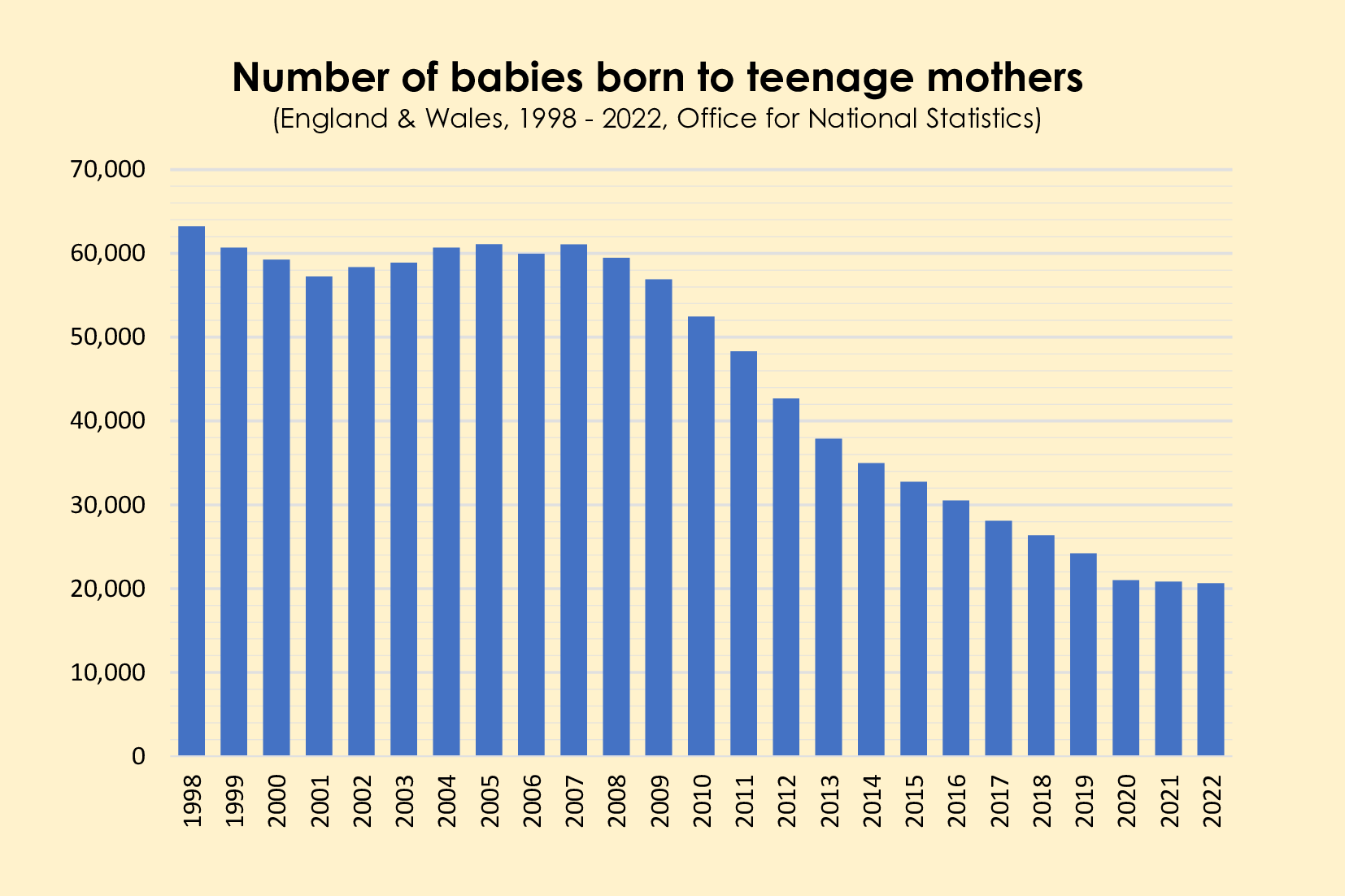
The number of children being born to teenage mothers has been falling for many years and is now only a third of what it was 15 years ago. For national numbers to fall by two thirds is significant and, in this case is very good news.
Note: Official data has a 3 year lag time – 2022 is the latest data.
Why do teenage pregnancies matter?
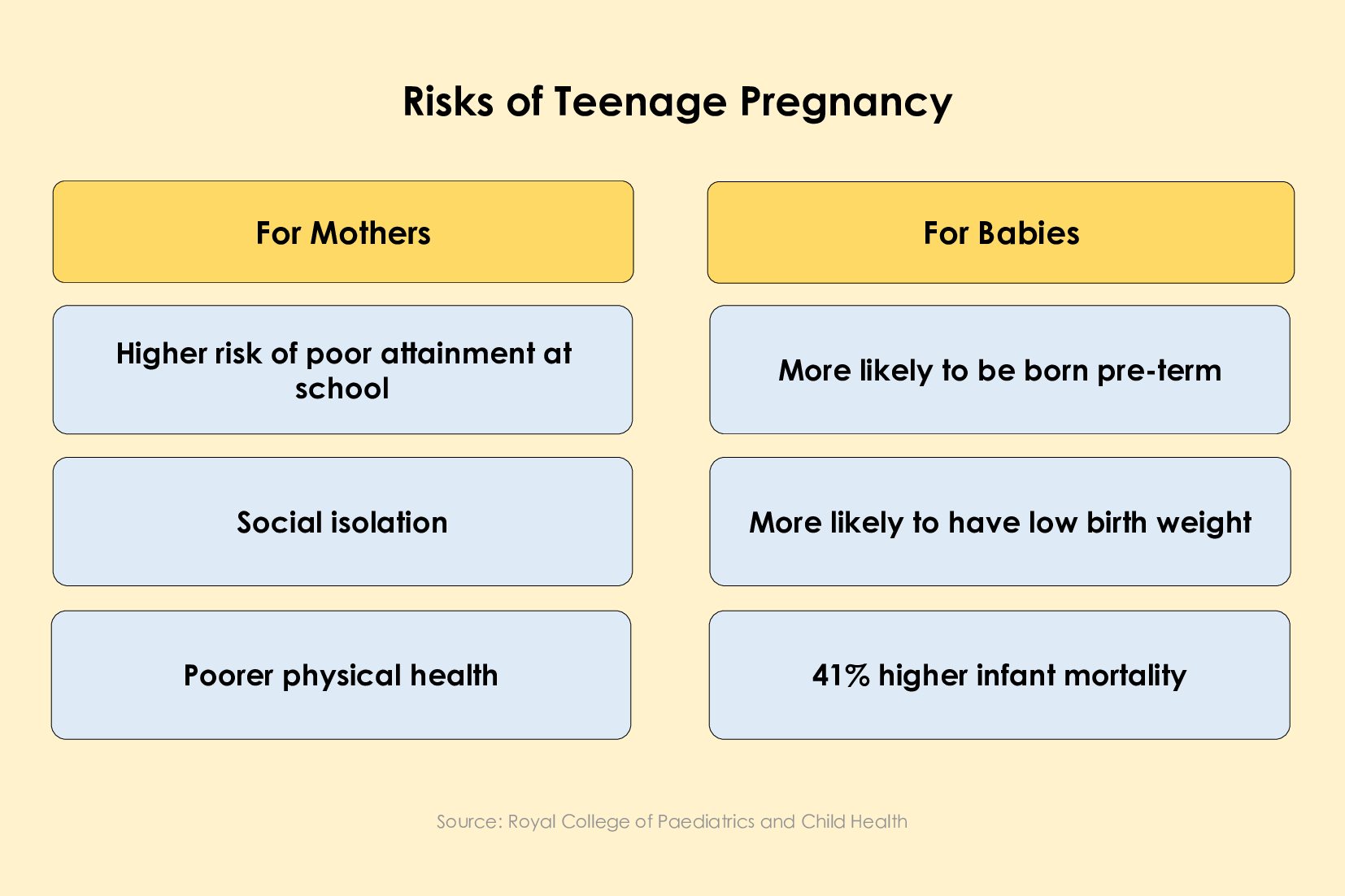
Teenage pregnancy is associated with poor outcomes for young women and their babies. So, it follows that waiting longer before having children leads to better outcomes for both child and mother.
Is the fall in babies born to teenage mothers due to more abortions?
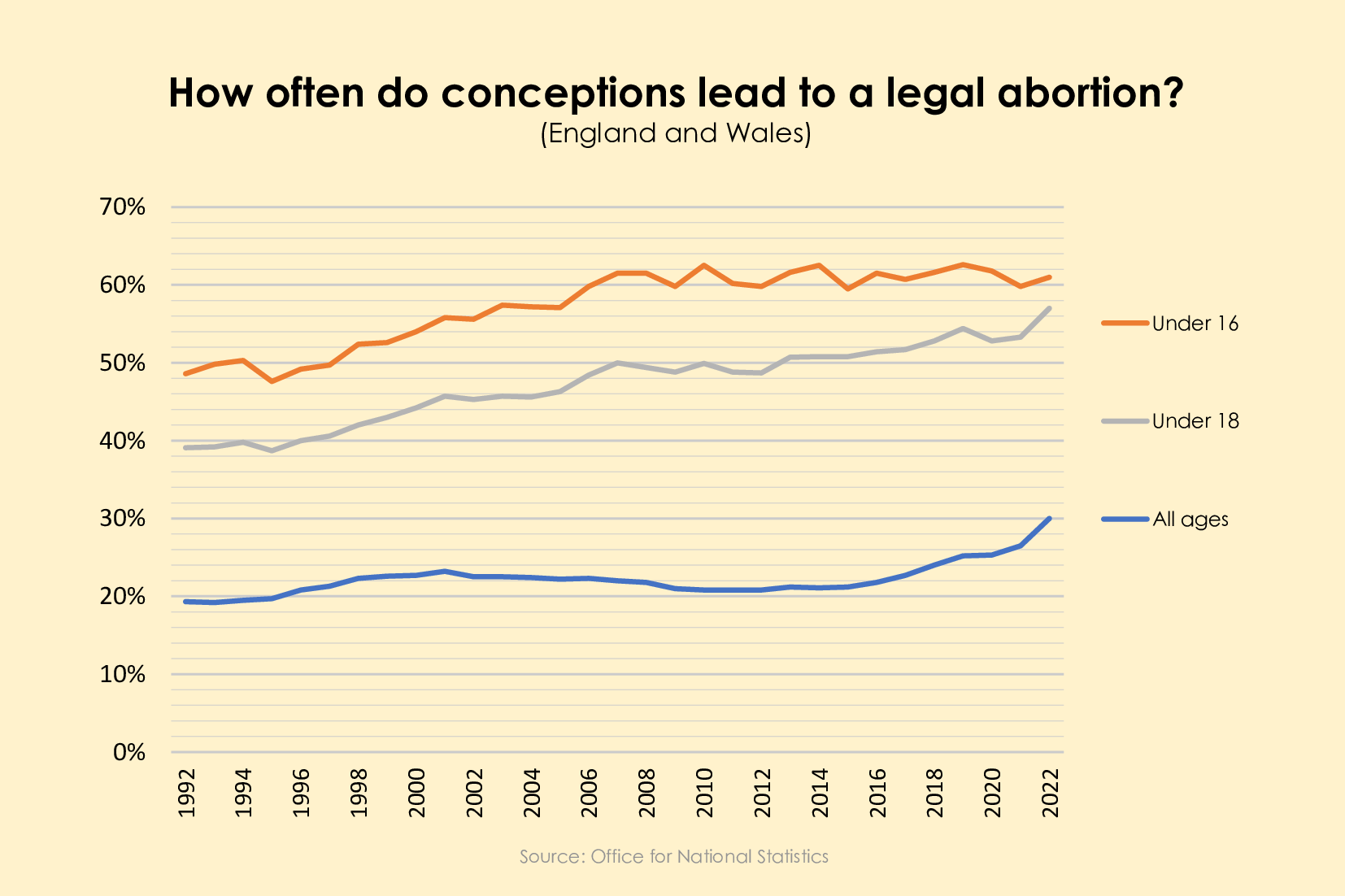
The percentage of pregnancies that end in abortion has risen over the last 25 years. This is true for females under 16, under 18 and also ‘all ages’. Often, pregnancies for under 18s aren’t seen by health workers as early as we’d like (they’re more often unplanned, confirmed late and things are sometimes slowed by the girl’s fear of disclosure).
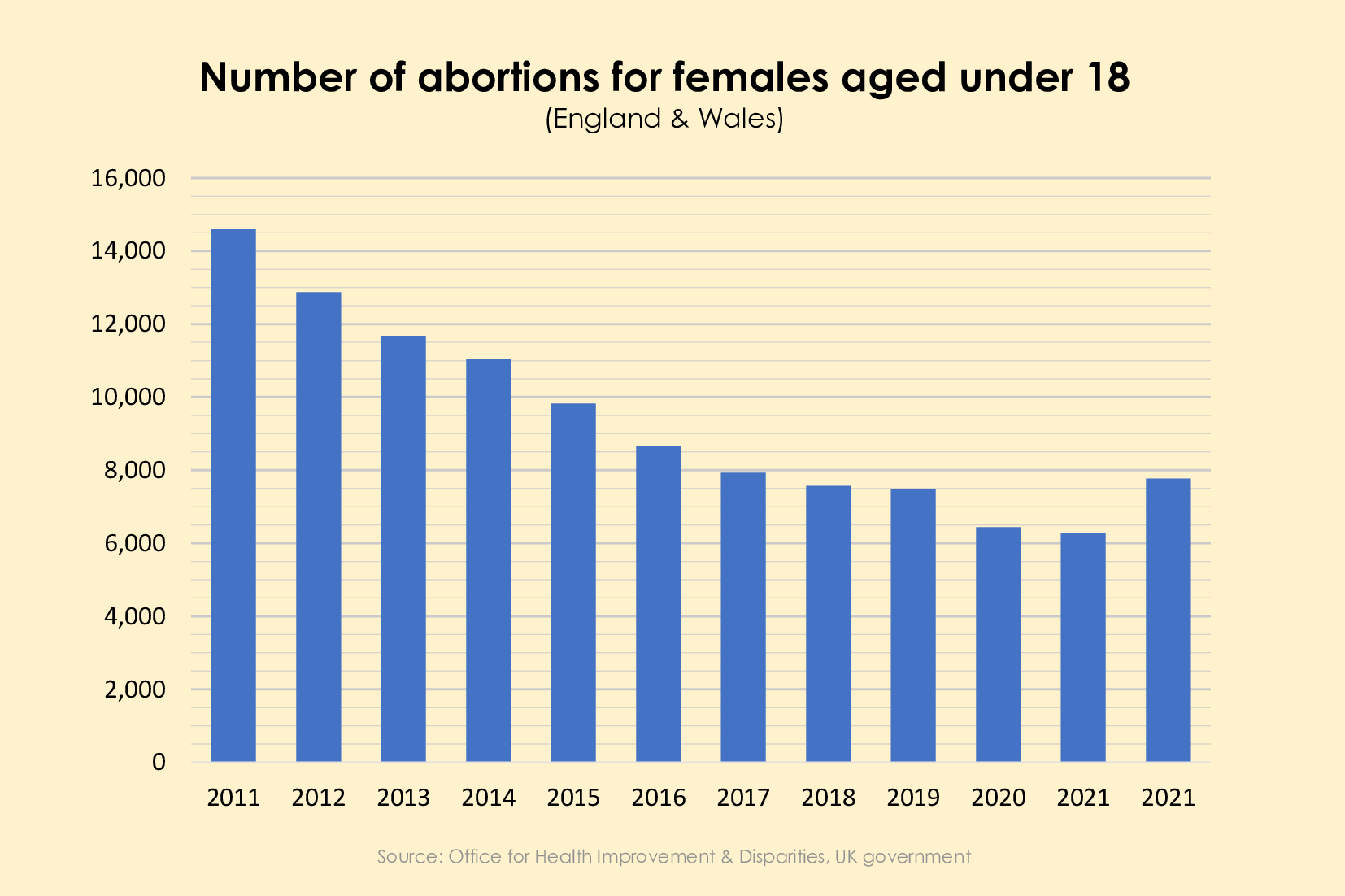
However, whilst the rate of abortion has risen, the actual number of abortions have fallen. Simply put, there are fewer births because fewer girls are getting pregnant.
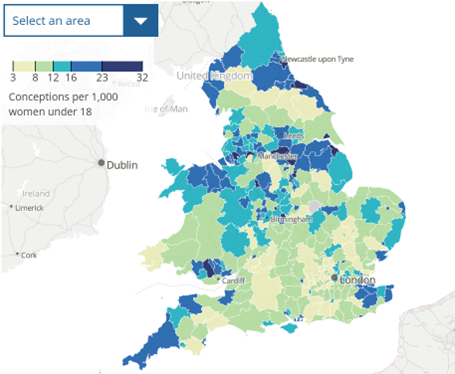
Where is teenage pregnancy highest?
For local areas, child poverty and unemployment have strongest link to pregnancies of under 18 year olds.
But there are some surprises: Parts of Cornwall, Cumbria and Lincolnshire have higer rates than expected. In these areas, access to contraception and sexual health clinics may be an additional factor – especially where public transport options are limited.
Which individuals have higher rates of teenage pregnancy?
The strongest associated risk factors for pregnancy before 18 are:
⚠️ Free school meals eligibility
⚠️ Persistent absence by the age of 14
⚠️ Poorer than expected progress in Y7-Y9
⚠️ Being looked after or a care leaver.
How do we compare to Europe?
The proportion of babies born to teenage mothers in England and Wales is lower than most of Eastern Europe. However, the whole of Western Europe performs better which suggests that there is still lots of room for improvement.
In short, we are doing badly compared with the rest of Western Europe – that tells us we must do more, especially for youngsters from deprived backgrounds, with poor attendance or who are in care. The highest possible quality relationships and sex education (RSE) is crucial as there are still too many young adults who are critical of the quality of the RSE that they received. Pupil referral units and special schools must do even better – but RSE in mainstream primary and secondary schools is also absolutely vital.
How do we reduce teenage pregnancy even more?
The World Health Organization point out that there is consistent evidence that high quality RSE helps teenagers to be informed about contraception and often acts to delay the age that a teenager first has sex.
More broadly, Alison Hadley, an pre-eminent expert in teenage pregnancy, recommends ten approaches that successful areas do well.
That means that schools should keep improving the quality of relationships and sex education (RSE), with good information about contraception and sexual health. But also, redouble their efforts to communicate, educate and support parents and encourage parents to talk about relationships and sex with their child.
If schools improve in these areas, outcomes for our young women, girls and children will be even better.
The decline in teenage pregnancies should be celebrated as a success story – but data from elsewhere in Europe tells us that there is much more to be done.
Has your child just started secondary special school? Or, are you teaching in secondary special school for the first time? If you’ve heard about Entry Levels and aren’t sure what they are, this article covers:
How do Entry Levels (sometimes also called EL or Entry) fit in with GCSEs?
What subjects can you do?
How hard are they?
Who takes these qualifications and when?
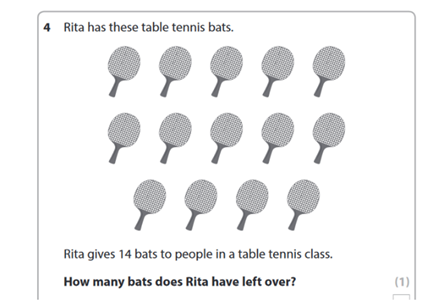
Examples of test questions
How do Entry Levels fit in with GCSEs?
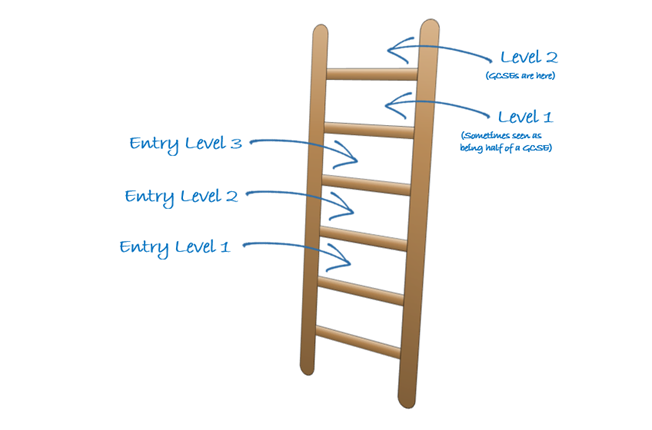
Entry levels recognise achievement at a lower level than GCSEs. Think of them as being two steps before GCSEs on the exam ladder. They are ideal for students who have SEND as they recognise their massive achievements – even if the qualifications are not as high as GCSEs.
The first Entry Level is Entry Level 1, and students can work up to Entry Level 2 or even 3. Some students do. Some students will never get that far. It mainly depends on the severity of their SEND, but can also depend on how long they have left in education. This ladder shows how qualifications progress all the way up to GCSE.
What Entry Level subjects can you do?
Maths and English are most common, but we have also entry levels in arts, e-safety, construction and many more.
The work related Entry Levels (such as construction and e-safety) tend to be more at Entry Level 3.
A government review in 2022 wanted to slim down the number of all the qualifications that sit below GCSE. However, it confirmed that Entry Levels will be kept (even if they don’t cover quite as many work-related subjects). It did recognise that, for some students with severe SEND, Entry Levels in social and personal skills are still important to have.
How hard are Entry Levels?
If you have severe SEND, then they are very hard. If you have no SEND, then you might think they are easy.
Entry Level 1 is for students who have severe learning difficulties. After all, why shouldn’t they be able to pass exams too?
For Entry Level 1 maths, students must to do things like:
Add and subtract numbers up to 20.
Recognise shapes like triangles and rectangles.
Use terms like above, below, left and right.
For maths, there’s a calculator paper and a shorter paper where no calculators are allowed.
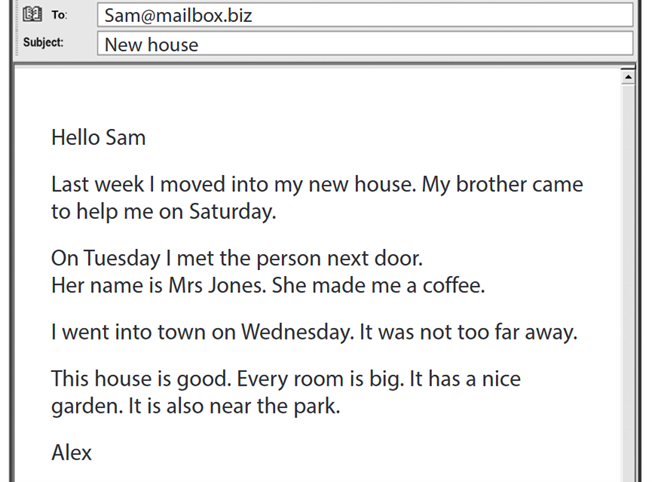
An EL 1 reading text
For Entry Level 1 English, students must do things like:
Read an advert or an email that has about 60 words and then answer questions.
Order letters of the alphabet
Write a short note to a friend
Choose the right spelling from a list (e.g. stope, stop or stopp)
Use capital letters for names and to start sentences.
An EL 2 reading text
Sometimes adults (e.g. parents or teachers) like to have a comparison so that they better understand what level of challenge that the tests have. This list compares Entry Levels to typical learning in a mainstream primary school:
Year 1 is roughly equal to Entry Level 1
Y2 & Y3 is roughly equal to Entry Level 2
Y4 & Y5 is roughly equal to Entry Level 3
Each qualification can be a massive achievement for the student who can feel very proud of all their hard work.
Who takes these qualifications and when?
An EL 3 reading text.
It is probably already obvious that these qualifications are accessed by our young people who have severe SEND.
These students tend to take the tests in Year 10 and Year 11 of school. However, some students also keep climbing the Entry Level ladder at college (i.e. Year 12 onwards).
Therefore, Entry Levels are mainly taken by students who have SEND and are aged between 14 and 20.
What about pupils who aren’t ready for Entry Levels?
These students often work on what’s called a “life skills curriculum”. This is for students working below Entry Level 1. They’ll learn road safety, self-care (e.g. hair brushing, using deodorant) or buying items in a shop. It is practical learning that helps youngsters to be as safe and independent as possible in adulthood.
Students who need a life skills curriculum have very severe learning difficulties. In most council areas, it’s only a few dozen Y11s. But if they are working hard, why shouldn’t they earn certificates for their efforts too?
Summary of Entry Levels
Entry levels are qualifications that are smaller than GCSEs and allow students who have SEND to gain recognition and a sense of achievement.
Entry Levels are a good thing and they make the world a little better.
That’s something we can all celebrate.
Where can I get more info?
Want to see more past exam papers for Entry Level English? Click here.
Want to more past exam papers for Entry Level Maths? Click here.
To ask questions or get support, please get in touch.
It’s important for all of us to have role models – that includes children and adults who have ADHD. Seeing ADHD success stories is useful for families, educators and people with ADHD themselves – especially if they are going through a tricky time.
ADHD is short for attention deficit hyperactivity disorder. It means that a person has difficulties with:
1. Impulsivity
2. Overactivity
3. Inattention
However, it is also important to reflect positively on ADHD, especially for those who have a recent ADHD diagnosis who are only beginning to understand it.
Many people achieve great things despite their ADHD. Here’s ten including from the worlds of sport, showbiz and public service. All are carefully sourced to avoid the speculation and rumour that often circulate online.
1. Lucy Bronze, Footballer
Lucy has won the Champions League a stunning five times which gives her legendary status in football. No other UK player has won the Champions League more (although Gareth Bale has also won it five times).
Lucy also won the Euros in 2022 with the Lionesses and was member of the England team who were runners up in the 2023 World Cup.
As well as her many medals and trophies, she has dyslexia, autism and ADHD.
2. Michael Phelps, Swimmer
Micheal has won more Olympic medals than anyone else in the history of the modern Olympic games.
He was diagnosed with ADHD whilst at primary school, and took a tablet every day to help him concentrate.
3. Greta Gerwig, Director
Greta is one of the most successful directors of all time, having directed the Barbie film in 2023. The film made over £1 billion but just as important, it made a lot of people smile!
Before directing, Greta was also a successful actress and film writer.
She has spoken about having lots of energy as a child but she didn’t know that she had ADHD until she was diagnosed as an adult.
4. Ant McPartlin, TV host
One half of legendary duo Ant and Dec, Ant describes that ‘popcorn thinking’ helps him to jump from one thing to another – a skill that is highly prized in the TV industry.
Ant has remained at the top of the TV listings for two decades – a massive achievement – with credits including Britain’s Got Talent and I’m a Celebrity.
Sadly his diagnosis did not come at a good time in his life – he sought help after taking time off work when he had a road traffic collision whilst drink-driving. Behind the scenes, he’s also had difficulty with drugs and alcohol dependency.
However, if we want to discuss ADHD role models, it is unrealistic to expect all of their lives to be without any difficulty.
5. Jessie J, Singer
One of the biggest divas from the 2010s music scene, London born Jessie J has talked about her joint diagnosis of ADHD and OCD (obsessive compulsive disorder).
Whilst she was cast in her first West End show aged 11, she still went to a pretty typical secondary school. Jessie then went on to study at a performing art school, join a girl group and become a solo artist who released hit after hit (for example Price Tag, Domino, and Bang Bang with Ariana Grande).
6. Olivia Blake, MP
Olivia Blake is a MP from Yorkshire. Her work as a politician has seen her campaigning on climate change, refugees and supporting local people during the ‘Stannington Gas Flood’ in 2022.
She has also been Chair of the All Party Group on SEND since 2020 and so works to make life even better for the next generation of children with SEND.
Olivia was diagnosed with ADHD as an adult, and it has helped her to better understand herself.
7. Lord Tom Watson, Politician
Tom describes being seen as a tough and organised, when he was a key member of Prime Minister Gordon Brown’s team. However, he sees some of his time more as a riot and that he was always late.
Do ADHD role models need to be famous?
No. Role models do not have to be famous – everyone and anyone could be a great role model if they can apply the right amount of effort and attitude.
Here’s three awesome role models who do jobs that are closer to home.
8. Daley Jones, Detective
Daley is a detective in London’s police force. He loves the structure and routine of working in the police force and also the urgency (for example, when he only has 24 hours to deal with a prisoner).
Daley was diagnosed as an adult in 2021. Understanding his ADHD has prompted him to learn ways to become more thoughtful and less forgetful.
He also seeks to help others and so set up the ADHD Alliance. This organisation supports police officers who have ADHD to be even more successful.
9. Betty Bedford, Chair of Governors
If we have big ambitions for all youngsters who have ADHD, why wouldn’t we hope that one day they can return to their school and lead the school governors?
Could you have ADHD and be a successful chair of governors? Yes – of course! Betty is chair of governors at a large primary school in Sheffield. When Ofsted last came to inspect the school, they hailed her and the formidable governors that she leads at the outstanding school.
In her day job, Betty works with children who have emotional difficulties, including children who have ADHD. She is a passionate cheerleader for the children, reminding them that they are awesome and talented – even on days when it might not feel that way.
10. Cassie-Jo Layzell, Senior Nurse
Cassie is a senior vascular nurse who provides life-saving treatments for people who have cancer. She must remain focused and alert on every shift so that every patient gets the best possible care.
Before moving into her current job, Cassie worked in a busy A&E department as a specialist trauma nurse. She cared for people with serious injuries and her quick thinking helped save many lives.
Cassie was diagnosed with ADHD aged 34 and, more recently, autism. She has found that her conditions have positive traits that, when used correctly, have benefitted her career.
She also credits her team for the strong support they’ve provided during her ADHD and autism journey.
Famous people who are not proven ADHD role models
There’s no credible evidence that these famous people have ADHD
Emma Watson, actress who played Hermione Granger in Harry Potter films.
Stevie Wonder, musician.
The evidence for Justin Timberlake having ADHD is not strong. It appears to come from a comment in a 2008 interview and could have been an off-the-cuff comment rather than Justin disclosing a diagnosis.
Sir Richard Branson is one of the most successful entrepreneurs of the last century. In 2023, he said ‘It’s very likely I have ADHD‘, he does not have an ADHD diagnosis. His wealth means that he could easily pay for a private ADHD assessment. Without that, we should avoid saying that he does have ADHD. However, Richard Branson does have dyslexia and there is some overlap between dyslexia and ADHD (e.g. competence at following instructions).
Professional Footballers who are ADHD role models
There is a broad consensus amongst researchers that physical activity helps reduce the symptoms of inattention found in ADHD. Thus, it is relatively easy to find sports stars who have ADHD. These role models help remind teachers and parents of the power of sport to focus the minds of many youngsters with ADHD.
Charlie Austin: Former Southampton and QPR player who was diagnosed in 2024 (pictured).
Jessie Gale: Arsenal Football Club and England Under 21 who was diagnosed aged 9. She talks about her ADHD from 9.10 onwards.
Ella Rutherford: Player for Millwall, Bristol, Charlton and Ipswich (talks ADHD from 18.40) diagnosed in 2024 in her early 20s.
Ricky Miller: Former player for Peterborough, Dover Athletic and Boston United, Ricky was diagnosed as an adult.
Jermaine Pennant: Former Liverpool and Stoke City footballer spoke about his diagnosis in 2023.
Both Ricky and Jermaine have been in trouble with the law on more than one occasion. This creates an interesting discussion point: If you made mistakes in the past, can you be a role model for who you are today?
Ravel Morrison (Manchester United, West Ham) also has ADHD. However, his crimes are more recent (fraud in 2023) which makes it harder to describe him as a role model yet.
Can you be a professional footballer and take Ritalin?
Ritalin is the name of a medicine that’s commonly taken by people with ADHD. Football has strict rules about the drugs that footballers can take (so that the game stays fair) and you should assume that it’s banned. However, professional footballers can apply for a special exemption from the rules so that they can take their Ritalin without being disciplined. This is called a therapeutic use exemption (or TUE).
ADHD role models diagnosed in adulthood vs childhood
One problem with lists like this is that they rarely distinguish between those who were diagnosed in childhood (such as Micheal Phelps, Jesie Gale) vs adulthood (all others).
Thus, a worry is that lists like this one end up overlooking those who had the most severe difficulties with their childhood behaviour.
Admitting that does not make the list invalid. It simply highlights the need to keep searching so that those with the most severe needs in childhood (e.g. expelled from school) are fairly represented.
Males vs Female in ADHD role models
UK data for ADHD shows that there are 3 times more males diagnosed with ADHD than females. That could result in a bias towards males when highlighting inspiring ADHD role models. This article intentionally tries to avoid this because we don’t know how many females have historically been overlooked (for example because their ADHD presents in a more subtle way).
Aim high for people with ADHD
People with ADHD are more than diagnosis. They can keep our streets safe, lead their country, be creative and excel at sport.
Let there be no limit to the ambitions that you have for anyone with ADHD.
It’s a story of greatness. It’s a story of one inspiring teacher and a story of the lifelong difference she has made to many who walked through her classroom door.
In the late 2000s, there was a mystery trend in one district of Sheffield: There were more gay teenagers.
Maybe Bebo, Myspace or the latest Hollyoaks plot was giving teenagers more confidence? However, the same pattern was not seen at the other secondary schools in the area. The trend centred around one secondary school – Wisewood School and Community Sports College.
For the teenagers who came out as gay, they all had one thing in common: their inspiring teacher, Ms Spurgeon.
With the school’s senior leadership and school governors backing her, Boo changed Wisewood Secondary School’s approach to PSHE. She wanted to make more of an impact and so solid ground rules, not much writing, and space to explore ideas were vital.
She also covered display boards with posters that said things like ‘It’s OK to be gay.’ At this time, such actions were groundbreaking because a law that prohibited teachers from saying that homosexuality was ok (known as Section 28) had not long been abolished. Despite it’s removal 3 years earlier, some schools were still hesitant to talk about LGBTQ.
The impact was stark and quotes from students show this.
When we think about amazing teachers, what does that mean? It’s making a difference and changing the entire path of a child’s life. Boo changed the paths of many lives.
Fingerprints of an inspiring teacher
Students saw her fingerprints everywhere. Who knows what was said behind the staffroom door, but the kids spotted a culture shift. Some even commented on how, even though they didn’t witness the conversations with Boo, they knew that some of the male teachers had “changed” in things they said and did.
Boo arranged for Ian McKellen to visit Wisewood in 2010. Ian played the wizard Gandalf in the Lord of the Rings trilogy which was huge at the time. Ian is also an openly gay actor.
It’s quite something for any student to meet a legend of the big screen, but it is also important for gay teens to see role models as it helps to reduce fear and show acceptance.
Movie Legends are a great resource to engage students, but the hard work was done on normal weekdays. Boo’s eye catching stunts enriched day-to-day work and slowly student’s beliefs began to change. The person delivering outstanding teaching, Boo, made so much of a difference that she was turning herself into a legend – one that would be written about 20 years later.
Soon, Wisewood School gained a prestigious Gold Award for LGBT-friendly Schools to recognise the impact of the changes that had taken place. More LGBTQ+ youngsters felt safe to come out and the trend of more gay teenagers began. These students were always gay, but Boo’s work meant that they felt safe to be open about it and not hide their sexuality.
Boo’s impact was wider than only LGBTQ+ acceptance, it covered everything you could think of. For example, Boo created a classroom culture where students felt so safe that they could talk about their own experiences (including topics that many adults feel anxious to discuss).”
A legacy forged from inclusivity
This all matters because a generation (now in their 30s) gained the wisdom to better deal with adult life, including LGBTQ+ people. This is liberating. The impact will last for their entire lives.
Despite not being a ‘high ranking’ staff member, Boo Spurgeon was an inspiring leader at Wisewood. One woman moved a community using PSHE, determination and ambition.
Many of Boo’s students now have children of their own and who knows how the values that those students learned at Wisewood will affect their own children? It is likely that, when a teenager is freed from the shackles of homophobia, their subsequent children have a better chance of freedom from homophobia too.
Wisewood School was merged with Myers Grove School in 2011. The building was turned to rubble before a park was built on the site.
The legacy of an inspiring teacher lives on.
Boo has now retired but her legacy lives on in Sheffield.
Whilst the school no longer exists, its legacy lives on Sheffield.
It’s ok to shout up about it even if your voice is small. And that is inspiring teaching; that is Boo Spurgeon; and that is a fine example of why PSHE matters.
ChatGPT is one of the best known Artificial Intelligance (A.I.) products. At the time of writing, it is free and has gained lots of attention. This article covers a few basics, plus practical examples of using A.I. to make schools even more inclusive for SEND pupils.
What is ChatGPT?
It’s a website that allows you to ask questions (known as prompts) and get responses. The computers behind power the website read a masses of text and learned to write – often as well as humans.
For example, you can:
Ask it to plan a reading workshop.
Ask it write a poem about the seaside town, Whitby.
Ask it to explain autism.
How is ChatGPT different to Google?
When you type your query into Google, you get a list of all the existing websites that Google thinks might answer your query. Google finds things that have already been written… On the other hand, Chat GPT uses everything that it has ever read to answer your query itself.
What ChatGPT and Google have in common is that both will be used in classrooms on a daily basis and both will be taught to primary and secondary school pupils.
How do I get onto it?
Google ‘Chat GPT,’ then click through to set up an account. Accounts are easily to set up if you have a Outlook or Gmail account. Alternatively, click here.
If you don’t want to set up an account, you can access ChatGPT without doing so.
Using ChatGPT in primary schools
Let’s say that I want to generate vocab for some SEND pupils to use when writing. Prompts can be written as questions, but they don’t have to be – You can simply tell it to do something. Here’s an example of me asking ChatGPT to create a word bank for the LEGO origins story. It’s an example taken from our ChatGPT guide for primary and special schools.
There are various companies that are all competing to become the best. Four of the best known are:
Co-pilot from Microsoft.
Gemini from Google.
Llama from Meta (the owners of Facebook).
DeepSeek from High-Flyer, a Chinese hedge fund.
You may hear comments about one being better than another but, for the typical user, they all do the same thing. It is possible that one will become dominant (just like Facebook became dominant over MySpace, Bebo, Friends Reunited etc), but right now no one knows who will win this technological race.
For users of Microsoft computers, one advantage of Co-pilot is that it’s often built into your web browser and so you can access it in one click.
Five Ways to detect when a pupil has used ChatGPT / A.I.
1. Verbosity
A.I. is normally more verbose than a typical pupil. Therefore, if the work is highly detailed, this may make you curious…
2. Change in writing style
Is a pupil’s writing style or performance is markedly different? Can you think of a reason for this change (such as a pupil’s carer works in steel and the work is about how steel is manufactured). If so, this may make you curious…
3. Asterisks to make titles
Humans rarely identify a title using asterisks. However, some A.I. tools can’t write in bold or italics, so to show subheadings, they use asterisks, for example: ** The Hydrological Cycle ** or **How is steel made?**. Furthermore, sometimes a quirk of copying and pasting from A.I. adds asterisks to your titles.
4. Square brackets
It’s rare for humans to use square brackets, unless they are academics.
If you see text with square brackets used unusually [1], this can be an indicator of A.I. [2]. In the previous sentence, the use of [1] or [2] are out of place.
5. US spellings
The default for some A.I. tools is US English, for example:
I apologize for my behavior in your lesson and that is why I am writing this letter…
One thing I did well was my organization of my paragraphs.
In UK English, several of the above words should contain the letter s instead of z.
Online tools for detecting text written by A.I.
There is an explosion of websites that claim to detect A.I. Whilst they show promise, you need to research the quality of these before relying on them. That’s because there are examples where human-authored text has been flagged as A.I. generated. If you are going to use these tools, drop your text into several detectors to check if you get consistent results. You can find them by Googling AI writing detector.
Detecting ChatGPT: A warning
No single indicator is conclusive but, for now, the above list are some of the least flawed indicators we have. The list shouldn’t replace your professional judgement.
Pupils can side-step the above red-flags by prompting the A.I. tool to “Use less than 80 words, start a new line for sub-titles, never use asterisks or square brackets, and write in UK English.” Or they might simply run a spell check in UK English!
New waves of A.I. tools will guess that you are in the UK and so give English spellings anyway.
If you suspect A.I., one tactic is to ask the pupil to talk you through their work and use questioning to find out if they understand what’s written.
It’s unlikely that we’ll ban A.I. use in homework altogether (in the same way we don’t ban pupils from reading Wikipedia or BBC websites). The problem comes if pupils paste large sections from A.I., or Wikipedia or BBC and present it as their own. Why? Because the pupil hasn’t done the work themselves.
A.I. Questions for school governors and trustees
Wondering how governors support and challenge the roll out of A.I. in our schools? If so, help is here. We’ve curated 20 questions that can help governors perform their role effectively.
You hope that you’ll never need to attend court as part of your work. However, staff are sometimes needed to attend court, for example as a witness to a crime in the workplace or following a disclosure made by a vulnerable child that they work with.
The thought of giving evidence in a court can send some staff into a panic. Perhaps you have never set foot in a court or perhaps you feel that the responsibility of giving evidence weighs heavily upon you. On top of this may be a requirement for you to maintain a high level of confidentiality about what you witnessed.
These issues aren’t always easy to resolve, but there are some steps that can lessen the stress, anxiety or pressure you may be feeling: You can help yourself by knowing about support and about how courts work.
These five tips will help you prepare to be a witness at a court in England.
1. Contact the Witness Service
There’s two different services you might hear about: Witness Care Units and the Witness Service:
Witness Care is run by the police. They tell you which court you need to go to, when and at what time. They can also refer you to the Witness Service.
Witness Service are in the court, and are mainly run by Citizens Advice. They provide practical and emotional support for witnesses. For example, they can arrange a pre-trial visit for you to look around and chat about how things run. They are also available on the day for emotional or practical support (e.g. access to a special waiting room for witnesses so you’re not sat out on the concourse).
Google your local Witness Service and you’ll probably find a phone number. Call them to ask about what they do, for example:
What do you provide?
Can a witness sit in a separate area to a defendant?
Is it possible to visit court beforehand so that, by the day of the case, it’s a less unfamiliar environment?
Where in the court building is the Witness Service based?
Do you have any leaflets/booklets that I can read about attending court?
Is there a Victims Code? Is there a Witness Charter? What are they?
Is there anything I can or can’t bring? (N.B. Scissors in your laptop bag are disliked by security guards).
Are there any rules on having someone with me?
Another great place to start is the Witness Service page of the Citizens Advice website. If you live in London, the arrangements may be a different and support might initially come from Victim Support. Finally, if you are still struggling, ask Witness Care for info on the local Witness Service (Witness Care may even help you to submit the referral).
There are some things that you can’t ask…
Avoid expressions like ‘help me prepare for the case’: this can be misunderstood as asking for help with your evidence (when your evidence must be yours alone). The service won’t help you prepare evidence, but can try to remove any obstacles that might add stress or pressure on the day of the case.
The criminal justice system expects that you don’t discuss your evidence with others prior to the case, but if you’re unsure of what this means, it’s a good question to ask the witness service.
2. Talk to your line manager about support
You may be unable to discuss matters with your family or colleagues because of confidentiality. However, often your head or a safeguarding lead will be aware of some, if not all, of the circumstances.
Even still, don’t expect them to have all the answers. This might be the first time they’ve experienced something like this.
So, speak to whoever you think is best. In particular ask questions around:
Which colleagues is it ok to discuss this with?
Can we book in some time to debrief (e.g. on the day after the case)?
Who would be the best person for me to do this with? Can we get a debrief in the diary now to make sure that he/she has enough time on that day?
Is there any support through Human Resources for situations like this? Am I ok to ask them?
It’s important for you to have a good idea of the support available in your work place.
3. You may be waiting around for a long time when you attend court
You should be given a day and time to attend court. Magistrates’ courts often list cases for either 10.00am or 2.00pm. Within the court building, there are likely to be several courtrooms, each hearing a range of cases.
A courtroom may have eight cases listed at 10.00am. The magistrates then work through these cases. If the court runs out of time in the morning session (10.00am until 1.00pm), then remaining cases get moved to the afternoon list (although sometimes court staff switch cases to another courtroom if they have one that is less busy).
If you are appearing as a witness at a magistrates’ court trial, the court may have allowed more time for this: there might be only one or two cases scheduled in that courtroom on that day. Even still, no one can be certain how long you’ll wait before you give your evidence.
Crown courts hear more serious cases than magistrates’ courts. They can also be unpredictable, involve lots of waiting and cases are sometimes postponed at last minute.
Take something to occupy your mind, for example a book, handouts from your last training course (that you never got chance to read) or even the latest 9000lives.org blog!
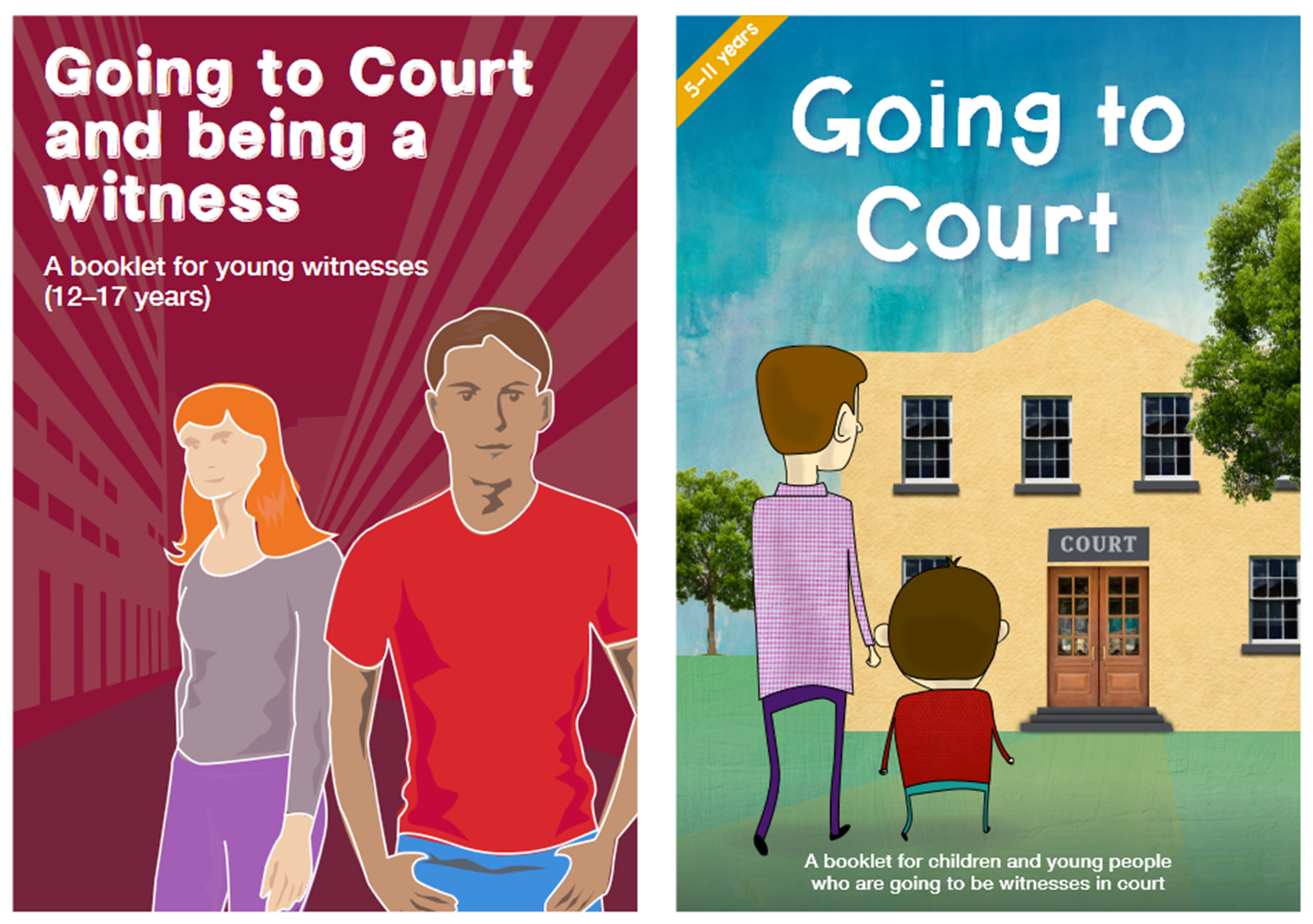
4. Read “Going to Court and being a witness”
Even if you are an adult, Going to Court and being a witness offers excellent information to those who are unfamiliar with courts. It is aimed at 12-17 year olds, so not all of it is relevant to adults. However, it is a quick and easy way to help to prepare for the day.
Once you’ve read that to get the basics, check out Victim Support’s excellent information about going to court.
If you are travelling a long way, need child care or the time off work is unpaid, the GOV.UK website has information about expenses that you can claim.
5. Know that its ok to find it uncomfortable or stressful
You might be uncomfortable that your evidence could send someone to prison, get them a criminal record or even end their career.
Another way of looking at this is that your evidence helps to ensure justice is done – whether the defendant is found guilty or not guilty.
All you are doing is truthfully saying what you saw, heard or did. Your job is to simply tell the truth. It is the judge or magistrates’ job to decide on guilt and, if guilty, decide a sentence. They will make decisions on all the evidence (and not just yours).
Summing up when you attend court…
We might not remove all of the discomfort or stress that comes from attending court.
However, the above tips can help to reduce any impact on our wellbeing and that is important as it makes you calmer and more able to give the best evidence possible. That is vital as it helps justice to be done.
If you found this article useful, check out more from the blog
This article refers to ‘disclosure’ because that is a commonly used term in safeguarding. In legal situations, others may refer to a disclosure as an ‘allegation’ (because defendants are innocent until proven guilty). Staff should use the terminology they most commonly use unless asked otherwise.
Do not wait to aim high for dyslexic pupils… You can start today. This article features dyslexic role models who use their strengths to fly high. It can be used in newsletters, displays, and lessons.
Dyslexia didn’t stop Lewis becoming one of the most successful F1 drivers in history.
2 & 3 Kiera Knightley and Orlando Bloom, Actors
Both of these world famous actors have dyslexia. Orlando encourages children to see it as their superpower, whilst Kiera’s love of acting helped to motivate her to read more (as she needed to read scripts).
4. Beatrice, Princess
Both Princess Beatrice and her husband, Edoardo, are dyslexic. She says talking about dyslexia is her favourite thing. By a princess talking about it, even more people in the UK understand even more about dyslexia.
5. Chris Robshaw, Rugby Player
Before becoming a rugby pro, Chris says that he had to try twice as hard at school because of his reading difficulties. However, those difficulties didn’t stop him from becoming England Captain, and captain of his own club – Harlequins.
6. Dr Maggie Aderin-Pocock, Scientist
Maggie has been such a successful scientist that Mattel, the toy maker, have made a special barbie figure of her. She’s also been invited to present TV shows to explain space to children and adults. She’s written a book about the moon (writing books is not something many people associate with dyslexia). On top of that, she’s also helped to invent new telescopes, detect landmines and shoot down enemy missiles.
Maggie is a great communicator of science and finds interesting ways to explain ideas. For example, she once showed how things travel in space by chasing geese around a paddling pool!
In March 2024, Maggie was made a Dame.
All in all, she’s an amazing human being!
7. Peter Kyle MP, Minister for Science and Technology
Peter is a Labour MP who became a Cabinet Minister after the 2024 general election. He describes himself as extremely dyslexic, but despite this has gone on to do well at university… His full title is Dr Peter Kyle MP – as he gained a PhD.
Despite struggling with reading, Peter was made Secretary of State for Science, Innovation and Technology. In 2025, he became Secretary of State for Business. This reminds us that there should be no limits to how high people with dyslexia can climb.
8. Adelle Tracey, Athlete
Whilst she struggled with dyslexia at school, there was no stopping her on the running track.
Adelle says that, when reading, she sometimes needs to read things three or four times to understand the text. However, when it comes to the running track, Adelle has hit speeds faster than almost every other woman on earth!
9. Tommy Hilfiger, Businessman
And finally, from the US, Tommy Hilfiger struggled with dyslexia at school. He was always a positive person who kept going and never gave up. He designed clothes and ended up with people wearing his clothes on every continent of the world.
Are there any dyslexic professional footballers?
Yes, although not as many as you might expect. Here are four dyslexic footballers who have reached the top flight of the game:
Lucy Bronze – She’s a Barcelona player but more importantly, as a Lioness, Lucy won the world cup. Lucy talked about her dyslexia for England Football team’s video on mental health (from 0.29 onwards). In March 2025, she talked about also being diagnosed with autism and ADHD.
Steven Naismith – Scottish pro footballer who played for Glasgow Rangers and Everton. Also won 51 caps for the Scotland national team.
Rachel Yankey – Once the most ever capped England player, Rachel had massive success at Arsenal. Rachel has since become a coach.
There’s no evidence for claims that former England captain Rio Ferdinand is dyslexic.
How to talk about dyslexia & dyslexic role models
The British Dyslexia Association use the following terms & phrases:
Is dyslexic, e.g. Lewis Hamilton is dyslexic.
Has dyslexia, e.g. Lucy Bronze has dyslexia.
Is diagnosed with dyslexia, e.g. Adelle Tracey is diagnosed with dyslexia.
A dyslexic person, e.g. Orlando Bloom is a dyslexic person.
Your dyslexia, e.g. How does your dyslexia affect you?
My dyslexia, e.g. My dyslexia makes school tricky at times.
So, if you’re talking about dyslexia (or any dyslexic role models) using these terms, you’re on fairly safe ground. That said, if you are speaking to an individual, it’s normally best to use the terms that they use (and it’s ok to ask what they prefer).
A good source for information about dyslexia is the British Dyslexia Association (BDA). As well education and employment advice, they also cover interesting topics like learning to drive and living with a dyslexic partner. Check them out at www.bdadyslexia.org.uk.
They also have a guide for parents on how to support their dyslexic child. Most resources are free – you just need to register. The resources are typically aimed at primary and special schools.
If you are a parent, our guide to SEND terms explains jargon in plain English and is much easier to read that a typical guide. That’s good news for both parents or staff to read – including those who have dyslexia.
How valid are our claims about the dyslexic role models?
Some online claims about dyslexic celebs are not credible. The dyslexia claims on this page can be verified via reputable news sites or interviews with the person. This assures you that this page is as reliable as possible (e.g. avoiding an unverified claim that Einstein was dyslexic).
Do you want every lesson to be good or outstanding for your primary school’s pupils? If so, here’s 14 ways to help your supply teachers to perform even better. The tips are focused on supply staff who provide day-to-day cover (rather than long term supply):
Part A: Advice for school leaders and office staff
Part B: Advice for teachers
A: Advice for School Leaders and Office Staff
It’s 8.05am and your supply staff are working with pupils in 25 minutes. We want to get them to their classroom with the knowledge and equipment they need as swiftly as possible?
To achieve this, streamline what you do and then streamline it even more.
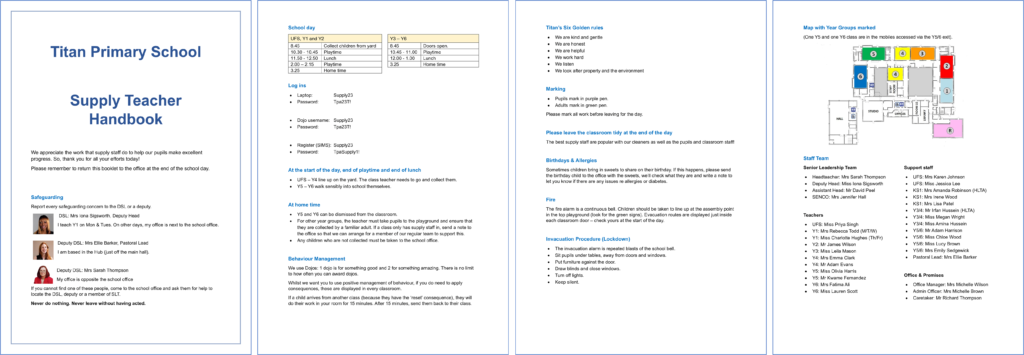
1. Provide a very brief handbook for supply teachers
Choose your key points and then outline them in the fewest words possible.
2. If you have an electronic sign in system, can you streamline it?
Some sign in systems are unduly lengthy. Are there bits that are there because we’ve always done it that way? For example, why ask supply visitors to sign the screen? What do you do with that signature? If your system takes a photo of everyone who signs in, what does the signature add?
Every moment we save getting supply staff safely signed in can be used to prepare for pupils. Therefore, do you genuinely need:
An email address
A signature
If I want to be remembered (This has been added because there are so many questions. Streamline the process and it doesn’t need to exist)
300 words of safeguarding information (but you do need an introductory statement, DSL pictures/job roles/locations and any key rules, for example “You must wear your visitor badge at all times”).
Some sign-ins ask for the name of the person who I’m visiting? Supply staff aren’t given the name of the person they are covering but they are told year group. Set it so that visitors can type ‘Year 2.’
It’s not just the supply staff who benefit from a speedier sign in. It also means that your own staff aren’t caught up in a queue to sign in and that your office staff can get back to their other jobs more quickly. Every second counts.
“Perfection is finally attained not when there is no longer anything to add…but when there is no longer anything to take away.”
Antoine de Saint-Exupéry, aviation pioneer
3. Streamline your ID checks for supply teachers
Some schools do more that is needed. You need a letter of assurance from the agency to say that all the right checks have been completed (because this also confirms reference checks, right to work in the UK etc). This letter can cover all their supply staff – you don’t need a letter for every individual.
You must:
See photo ID
See the DBS
Check the person on the ID matches the DBS
Record the DBS number and date
However, you don’t need to:
Photocopy the DBS
Photocopy the photo ID
4. Provide two paper registers
If supply teachers can’t access your electronic register, print two paper copies of the register – one for the morning and one for the afternoon. For planned absence, these can be printed in advance.
5. Tell supply teachers the key locations
You point out the toilets and staff room. Make sure you also point out:
Where to collect pupils from at the start of the day.
Where to dismiss them at home time.
6. Ensure the laptop works well
It’s hard to deliver outstanding teaching if the laptop:
Turns off if the power cable comes out.
Waits 2 seconds to display any words you just typed.
Enters sleep mode after 10 minutes of not being touched.
Ask your IT support to install a new battery or more RAM or buy a new laptop. Teaching unfamiliar classes can be tricky without the handicap of bad laptops.
7. Say thank you more
Simple is fine: “Just a big thank you… We appreciate your efforts to help our pupils make good progress today.” Humans tend to appreciate kindness and being appreciated – supply teachers are no different.
B: Advice for Teachers
8. When giving info about behaviour, say what works
If you are in school and giving a verbal briefing to a supply teacher, give concise information about behaviour in the class. This is not the time for a list of past incidents. Summarise key issues and then outline the best approaches.
9. Brief the TA the day before
If you know the plan, share it with the TA the day before. TAs play a key role in the day being successful. Informed TAs see round corners – for example collecting the glockenspiels on their way to class. TAs are precious on any day – but they are extra-precious on supply days. The more informed they are, the better.
10. Name two reliable children
During the day, supply teachers need to ask questions about routines, so say who’ll give them a reliable and concise answer.
11. Share your expectations for toilet, water bottles and sharpening pencils
The supply teacher does not know who has poor bladder control.
Put yourself in the shoes of your supply teacher… If you do not know who has toilet issues, would you be cautious?
Some pupils take advantage of this caution. Therefore, tell supply staff your rules for toilet trips, water bottles and pencil sharpening and they can follow them. If you do not share your rules, learning time will be wasted by excessive filling water bottles, toilet visits and pencil sharpening.
These off-task behaviours are often seen in SEND pupils more than non-SEND. If we want SEND pupils to make accelerated progress, it’s especially important to share your rules.
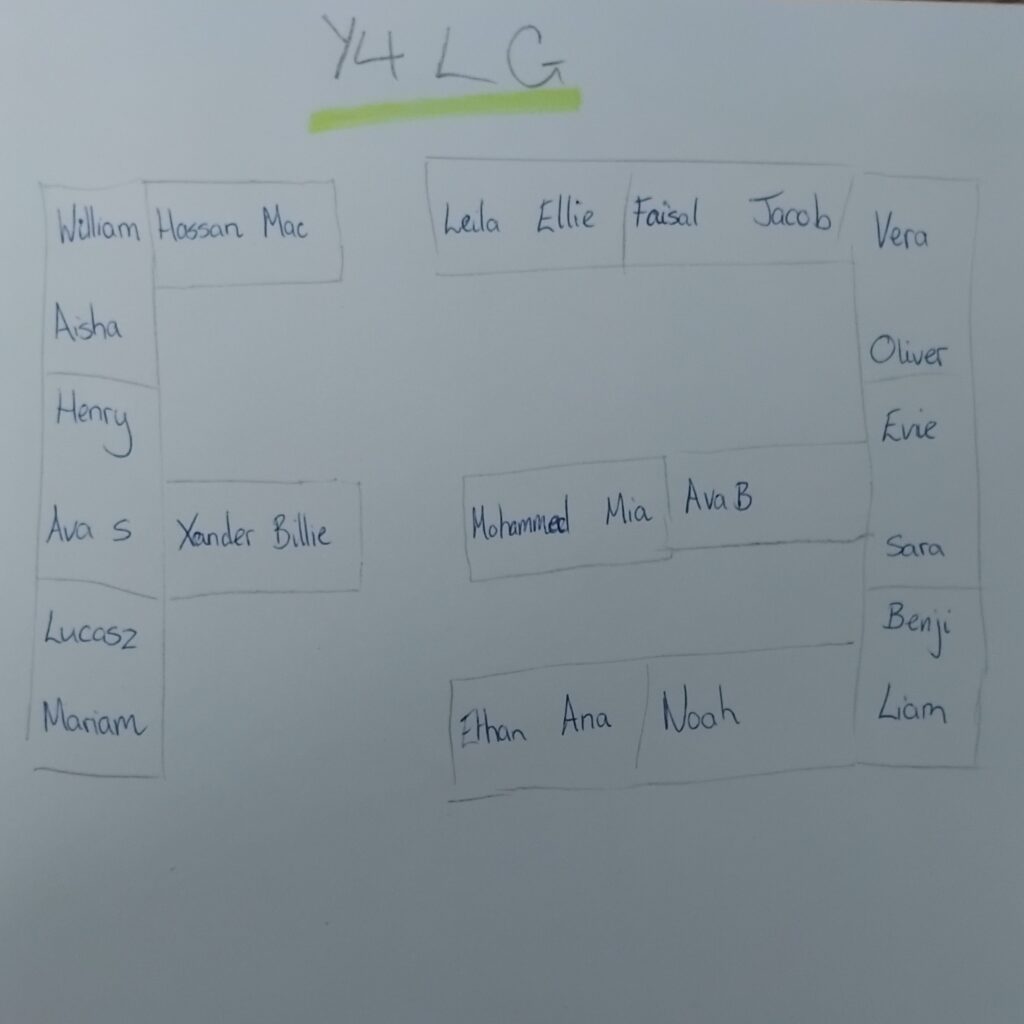
12. Provide a seating plan
Using a child’s name helps to build great relationships (and that helps behaviour), so a seating plan lets supply teachers know who is where. It’s also really helpful when one child claims that ‘Mia’s not sitting in the right place’ as the supply teacher can just check the plan.
If your school has ‘sets’, leave a seating plan for English and maths too. It doesn’t need to be fancy (hand drawn is fine) and, in KS2, a reliable child can add the names to the floor plan you’ve drawn.
13. Bin things
Do you have piles of paper on your classroom desk or worktops?
When teaching in someone else’s messy classroom, everything is harder to find. Use the fact that you have a cover teacher to motivate you to bin or file papers.
14. Do you really want to leave White Rose maths?
The White Rose slides do not always match the sheets. Supply teachers do not know which pupils have the right prior learning to access the varied questions. Because of this, children might need extra input – but your supply teacher can’t predict who or when. Your supply teacher can end up fire-fighting off task behaviour from pupils who can’t access the work independently.
If lots of pupils are struggling, it’s hard for the supply teacher to be good or outstanding. What’s more, you may have to reteach the lesson tomorrow.
If your school does use White Rose maths, give your supply teacher, for example, a geography lesson to teach in the morning instead. Then have a double-maths day when you’re back in.
15. Label you classroom door
You only need the year group and teacher’s name written in a clear font. Yes – it’s possible to get lost in a primary school. Moreover, if the teacher’s name is forgotten, there’s a really easy way to for supply teachers to check. This aids behaviour management (“Tyler. I’m going to leave Mr Evans a note about how well you’ve done today.”)
Conclusion
In 2024, Schools Weeks reported a shortage of supply teachers. Just like you can choose to not have supply teachers back, they can choose to not return. Having supply staff returning is good for consistency and quality of teaching and learning.
There is no us and them with supply teachers. We are all on the same team. The tips above make it easier for supply teachers to perform at their best and, in doing so, support even better progress for our pupils.
More helpful info for school staff (including supply teachers!)
Let’s shine a light onto the lives of autistic role models who use their strengths to fly high. It reminds us that the strengths of the autistic mind can often be an asset and that we should have high aspirations for autistic youngsters. Let’s aim big!
Furthermore, there is much false information online about who is (or is not) autistic. So, this article has links to websites that have high editorial standards (mainly reputable news sites). You’ll find those links at the end of the article.
This content can be used in displays, lessons, newsletters etc. Autism Awareness month is every April, although you never have to wait to raise aspirations for autism… You can start any day.
1. James McLean: Pro Footballer
James McLean represented his country, Republic of Ireland, over 100 times. He even captained the team in 2022. During his club career, James has played for Sunderland, Stoke City, Wigan and West Brom. Now at Wrexham, you can spot him on ‘Welcome to Wrexham’ – the football documentary series on Disney+.
James has a daughter who is autistic. He noticed ways that he was similar to her and went for a diagnosis. After being diagnosed, he went public because he wanted to show his daughter that being autistic should “never hold her back from reaching her goals and dreams.”
2. Greta Thunberg: Climate Activist
Greta inspires people around the world to care more about our dying planet. She says her autism is a super power and answered critics by saying “When haters go after your looks and differences … you know you’re winning.”
Greta has been nominated five times for the Nobel Peace Prize. That is an incredible for anyone, but even more impressive because Greta is only in her early 20s.
3. Guy Martin: TT Rider & Record Breaker
Guy Martin is a motorbike rider, who has also written books and presented TV shows. One of them was the Channel 4 programme, Worlds Fastest Tractor, where he broke the World Record for driving a Tractor at 153 mph. Guy Martin is autistic. Unfortunately, he’s quoted as describing his diagnosis as ‘a load of tripe.’ The problem with these words are that, in news stories about him, we don’t always get told what he said next:
“The way I look at it is that maybe having that is why I am the way I am. Maybe that is all down to the autistic side. I don’t know.
“If there are any benefits to having it, it’s that you just get your head down and get on with things. I apply that to the way I work.”
It sounds like Guy is someone who accepts his diagnosis but prefers it to be just part of him, rather than let it define or limit him.
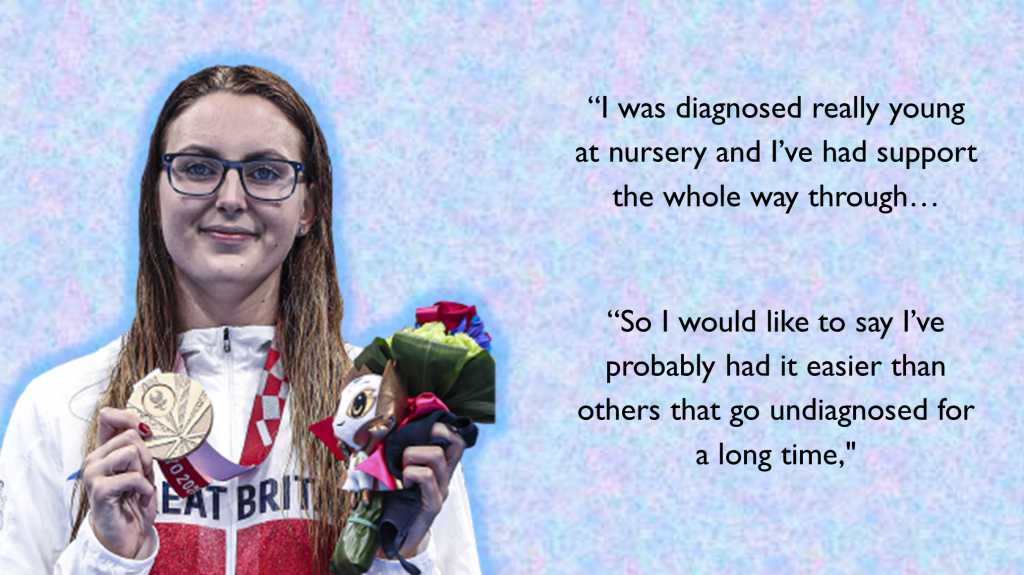
4. Jessica-Jane Applegate: Champion Swimmer
As a British Paralympic swimmer, Jessica-Jane won gold and silver medals in the Tokyo Olympics. She’s also collected gold, silver and bronze medals in the London 2012 and Rio 2016 Games.
Jessica-Jane was diagnosed with autism at nursery and found swimming was a great way of relaxing at the end of the school day.
She also has a popular TikTok account that is full of videos about swimming, fitness and cats.
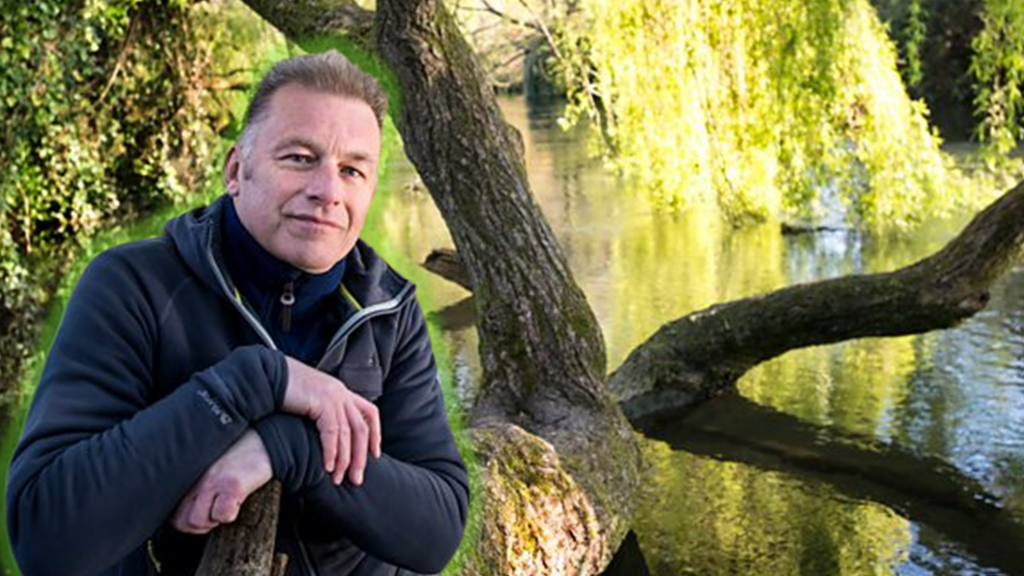
5. Chris Packham: TV Presenter
As both a presenter and wildlife lover, Chris has educated and entertained audiences for 40 years. Chris was diagnosed with Aspergers, a form of autism back in his 20s (so between 1981 and 1991) and believes that, since getting his diagnosis his life has been wonderful.
6. Susan Boyle: Singer
Singing sensation Susan Boyle first won fans on Britain’s Got Talent and was a runner up in the final. She’s since released chart topping hits, sung with some of the top names in showbiz including Madonna, Micheal Ball and even Peter Kaye.
Susan was diagnosed with Asperger’s as an adult, her journey reminds us to never give up on what we love.
7 & 8. Elliott Garcia and Bruno: A Voice Actor and a Cartoon Character
Voiced by Elliott, a nine year old autistic boy, Bruno the Brake Car is an autistic character in Thomas the Tank Engine TV stories. Bruno loves schedules and routines and even has his own cloudy ear defenders.
On the show, Bruno’s job is to slow trains down if they hit danger. But, more generally, he introduces young kids to autism and helps them to learn acceptance.
Elliott, on the other hand, is one of the few 9 year olds to have his own IMDB page listing his acting credits. He auditioned and was chosen from all the hopefuls to lend his voice to Bruno.
9. Mel Sykes: TV & Radio Presenter
Mel Sykes says that getting her diagnosis was “fantastic really because it does make sense of a lot of things. I’m a very sensitive person, I care about the truth and facts.” She also challenges the view that autistic people don’t have empathy “That’s not all autistic people… I have great empathy for other people, I’m so sensitive to other people’s needs (and sometimes more than myself).”
Mel was diagnosed as autistic in 2021.
10. Tom Stoltman: World’s Strongest Man
Can you be an autistic world champion? Of course!
Scotland’s Tom Stoltman has been crowned the World’s Strongest Man an incredible 3 times. He holds multiple world record for his superhuman strength.
To give you a feel for his strength, imagine trying to pick up a 16 year old lad. Now imagine picking up 2 at the same time – could you do it? How about three? Would that be impossible?It would not be for Tom – his strength means that he could lift an impressive seven Year 11s at the same time.
Another way of looking at his record deadlift of 430kg is that it’s lifting the same weight as sixteen Year 6 boys.
Tom was diagnosed as autistic when he was five.
Autistic Role Models in professional football
(Updated 16/09/2025)
There’s a stream of pro-footballers who are being more open about their autism. This includes Greg Halford (a defender who’s played for Cardiff, Sheffield United, Notts Forest, and Brighton) who talked about his autism in November 2023.
John O’Kane, who is now retired from the game, has spoken and written about his autism. John played alongside the likes of David Beckham and Gary Neville at Man Utd.
In the women’s game, it also includes Safia Middleton-Patel, Man Utd goalie.
The topic of pro-footballers and autism also includes footballers who have spoken about autism in their family, including:
Paul Scholes (former England midfielder, has autistic son & first disclosed this in 2011).
Paul Mullin (Wrexham striker, has autistic son).
Simon Murray (Scottish footballer, has autistic son, disclosed October 2023).
Pat Nevin (Chelsea and Scotland legend, has autistic son, disclosed June 2023).
Others who are Claimed to be Autistic Role Models
There are others who Google results suggest are autistic. However, there is often no proof. For example, you can find many articles that claim that Bill Gates, boss of Microsoft, is autistic. However, he’s never said that he is autistic and it’s not the internet’s job to diagnose him.
A second example is the inventor of Pokemon, Satoshi Tajiri. I found no evidence that he is autistic, only people saying they think he is. There’s no interview, nor is there proof from any trustworthy sources.
We can raise awareness of autism without speculating on the medical history of the rich and famous. This is not an article that points at anyone and decides they seem socially awkward and so must be autistic. That’s one reason why this article was written – so that you have an accurate list.
Perhaps the rules on speculation are more relaxed if people are long dead (e.g. Albert Einstein, Charles Darwin), but if people are living or recently departed, we should not speculate.
Which brings us to Tim Burton… Is he an autistic role model?
Filmmaker Tim Burton is included on some lists of successful autistic people. His former wife, actress Helena Bonham Carter, said she thinks he’s autistic, but there’s no confirmation that he is. It’s not on his website timburton.com and we couldn’t find any reliable source to back up the claim that he identifies as autistic. So, let’s not speculate that he is autistic just because he is they’re famous.
Autistic Role Models of the Future?
These characters are great role models for autistic youngsters – including those who are just discovering their diagnosis. Maybe they can inspire our autistic youngsters to go onto great things and become role models themselves in future.
In the meantime, let’s all try harder to embrace diversity and celebrate the incredible potential within every one of us.
And, let’s also try to avoid guessing which famous people have autism.
You can verify our claims about these Autistic Role Models
Will autism or ADHD prevent you, or your child, from joining up? The answer is not “No”, but the options are narrow: It depends on the impact of the ADHD or autism.
Our armed forces websites have lists of health conditions that can stop or delay you from joining up. They are clear that you can still apply even if you have these conditions – it’s just that you will still need to pass the medical. If we ever see a return to National Service for 18 year olds, the same rules will probably apply.
Some items on the list are short-term obstacles. For example, you can’t join the army, navy or RAF if you are pregnant. Other issues can’t be overcome (e.g. the loss of a limb).
You can read the army’s list of medical conditions here. Surprisingly, Autism and ADHD are not mentioned on the list.
The medical assessment and autism or ADHD
To join the forces, candidates autism or ADHD will need to pass the medical assessment (as well as the normal selection tests). This medical assessment uses a book called the Joint Service Manual of Medical Fitness. This was updated in Oct 2022.
Our Army, Navy and RAF all use this same book, so the outcome of assessments should be the same for all three services.
ADHD
The book outlines the military’s view on “hyperkinetic disorders.” This includes ADHD:
With ADHD, if the applicant also has a common mental disorder, then they should be assessed as medically unfit. Common mental disorders include
Depression
Generalised anxiety
Obsessive Compulsive Disorder
Panic
Phobias
If the applicant with ADHD has drug or alcohol problems, they should be found medically unfit.
If the applicant with ADHD
does not also have a common mental disorder
does not have any substance misuse problems
has not had behaviour difficulties for at least a year
…then they may be found medically fit to join. Evidence should be sought to confirm the candidate has been functioning normally for at least a year (e.g. successfully holding down a job, good attendance at school).
Autism
It’s less black and white.
The question is does the autism (or Aspergers) disable the person?
The term disable means that the condition has a significant impact on day-to-day life. Some autistic people have developed such advanced coping strategies that autism does not have a significant impact. Also, in cases where the autism is mild, it may not disable the person. In both cases, then the person might be declared medically fit by the specialist military physician.
But, unless the autism is mild, or non-disabling, the person will normally be declared unfit.
If there is doubt, a referral is made to the service’s doctor to do more detailed assessments. However, they may say that such an assessment isn’t needed because the normal forces selection tasks are such a good way of assessing the impact of your autism.
Is this legal?
The Equality Act (2010) says that disabled people should be treated equally. However, it has exceptions for our armed forces. For example, you don’t break the Equality Act if you discriminate in order to safeguard national security (as long as it is a proportionate way to safeguard our national security).
Because autism and ADHD affect people so differently, it would be hard to argue that a blanket ban on ADHD or autism is proportionate. However, if the forces medically assess a person, they can still reject them if the disability could affect our national security if that person was serving in our armed forces.
Do not assume you will get a face-to-face assessment. An assessment might be made without seeing you, for example, by making an assessment of medical records from your GP.
There may be historic things in your medical records from a time when your condition did impact on your day-to-day life. So, if you want to join up, the onus is on you to show you are now functioning normally. Letters from an employer, college, officers in the cadets etc may help in this. It’s important to note that, even with extra evidence, you might still be assessed as medically unfit.
Is there a future for Autism or ADHD in the services?
The forces guidance changes over time but assessors will always need to consider the need to deploy troops across the globe at short notice. Reasonable adjustments, that can be made in UK civilian jobs, can’t be made when operating in Sudan, the mountains of Norway or the jungles of Borneo.
However, as we move towards an age where high-tech warfare plays a bigger role, the skills of neuro-diverse people may become more highly valued and, in ten years’ time, the rules may be very different.
In the meantime, it is not an automatic “No”, to autism or ADHD. It just depends on their opinion of the impact of the condition and, in the case of ADHD especially, whether there are other mental health, drug or alcohol issues.
The benefits of a SEND Tribunal are clear to parents: A chance to appeal for more than is on offer for your child.
Before anyone begins a SEND tribunal, it’s helpful to think about costs.
An Education, Health and Care Plan (EHCP) is a legal document that sets out a child’s special educational needs or disability (SEND) and what will be provided for these needs.
There are rules on how EHCPs are written, what they cover and who should be involved in writing them.
The rules also say that parents can take their local authority to court (the local authority is usually your local council). These special courts are called Special Educational Needs and Disability Tribunals (SENDIST) and are used when parents and local councils can’t agree.
SEND Tribunal: Types of Cases
In total, there are 43 types of appeal cases but this includes some very rare issues. The four most common SENDIST appeals are when parents believe that:
My child has SEND but the council won’t assess re: an EHCP.
The right school hasn’t been named for my child.
The right school hasn’t been named for my child and I don’t think that the EHCP describes their difficulties or support needs correctly either.
The council assessed my child’s SEND but now say an EHCP isn’t needed. I disagree.
Government data suggested that about 30% of appeals were about a council refusing to assess a child’s SEND (August 2020).
Less common appeal cases include:
A parent asks for a reassessment of their child’s SEND, but the council says no.
The council want to cease an EHCP, but the parent disagrees.
A parent agrees which school is right for the child, but disagrees about the support their child gets.
Most of the other types of appeal tackle similar issues about which school is attended or what’s provided in school, but they are coded differently (for example, because they also consider what the NHS should provide).
What happens at the SEND Tribunal?
At the SEND tribunal, three experts hear views and read evidence from parents and professionals (e.g. a rep from the local council or a head teacher).
The three member panel is typically made up of a legal expert (a judge), an education expert and an expert in health or social care.
Some parents have a lawyer, whilst others represent themselves. There aren’t many places where tribunals are held, so you will typically travel to your nearest large town or city.
SEND Tribunals decisions are legally binding. However, one complication with tribunals is that they have a risk that everyone loses in some way. This includes parents, even though most decisions go in favour of parents.
Financial cost of SEND tribunals
The cost of a SENDIST tribunal might be measured in money. The cost to Her Majesty’s Court & Tribunal Service is over £2000 per child. This pays for preparation, administration and the hearing day itself.
Then there’s the cost to the parties attending the SENDIST tribunal. For example, there’s parents paying legal fees or the local authority paying staff time. Costs can soar to many thousands of pounds for each side. The Department for Education commissioned research in 2017 that indicated that costs for local authorities varied from £3,500 to £11,000.
Parents should not be put off by financial costs. Parents can represent themselves and this costs nothing.
How much does it cost parents who pay for lawyers?
Some parents pay over twenty thousand pounds and take debt to pay for it. A chunk of this cost is lawyers, but it often also includes paying for private SEND assessments to give parents more evidence.
Most parents can’t afford lawyers, however, help is at hand for these parents. The IPSEA charity have reliable advice for parents thinking about appealing to the tribunal. Their website is a gold mine of advice for parents.
Some parents can get legal aid to help prepare the case.
The very high parent win-rate suggests that many parents win appeals without lawyers. Either way, tribunal costs are more than just money.
Alternative costs of SEND tribunals
Alongside financial costs, the real costs can be emotional. Tribunals treat parties with respect, but the experience of going to court can still be very stressful.
For both sides, the stakes are high. With high stakes, there can come a sense of pressure, which can affect the wellbeing of those involved. Parents have often made a large emotional investment in the run up to the case. Emotionally, they’ve a lot to lose.
Even if the parent ‘wins’, the fact that they felt that they had to take their council to court means that this can be somewhat a hollow victory. They can never regain the time and emotional outlay that they invested over the past months.
The same applies for the professionals. If the council wins, the fact that the case could not be resolved without a SEND tribunal means that it is a hollow victory. They can never regain the time and emotional outlay that they have invested over the preceding months.
For losing parties, this can take some time to come to terms with. They may go through emotions described in the Kubler-Ross change curve:
(Image Source: NatCen Social Research: Natcen.ac.uk)
Educational Cost
As adults focus on the disagreement, they can be distracted from doing things that would make life better for the child now. Time and energy that could be spent working together is diverted towards a legal fight.
During the run up to the tribunal, many children still make progress. But we might ask how much extra progress they would have made if adults didn’t have the distractions of a SENDIST case. This can include times when:
The child is withdrawn from school until the disagreement is resolved.
Simple meetings (e.g. to set targets for next term) turn into debate about big issues. The little things then don’t get done (or they get done badly).
A mainstream school hesitates on actions to be more inclusive because “Parents want a special school and we don’t want to undermine their case.”
SEND Tribunal Timescales
From lodging an appeal to a hearing typically used to take 12 weeks. This has climbed to over 20 weeks as the number of parents lodging appeals has increased. However, this can be shorter for emergency cases (for example, secondary school transfer). The 20 week timescale isn’t the full story because before an appeal is submitted by a parent, there may have been months of trying to resolve the disagreement without going to SENDIST. This is time that a child can never get back.
A SEND Tribunal conclusion…
The costs of a SEND tribunal are not just measured in money. They can also include the emotional costs, time cost and educational costs.
Recognising these costs doesn’t mean that a parent shouldn’t take their case to the SEND Tribunal – lots do and most ‘win’, but it does recognise burdens that many parties can face when preparing for and attending a SEND tribunal.
It is also true that, although one party ‘wins,’ when parties face each other in court, everyone loses in some way.
Where can I get more help?
Watch the Tribunal Service’s video explaining SENDIST tribunals here (scroll to ‘Chapter 4 – Hearings at the SEND Tribunal’).
The autumn 2024 budget gave an extra £740 million for SEND. That’s much needed given the number of councils who are reporting that finances are stretched to almost breaking point.
Whilst extra money for SEND is always welcome, what other reform could be implemented with low cost and without needing new laws (which can take years)?
1. Publish where children attend school
This used to be published in local school organisation plans. If there are a lot of pupils who live in catchment but attend other schools, leaders and governors can explore why?
Some answers are simple. For example:
We share a catchment with a Catholic school.
We’re a free school and have a very wide catchment.
We can’t take all the pupils in our catchment because we are so oversubscribed.
But having data seen by governors makes it less easy for bad habits to begin (e.g. encouraging parents of SEND pupils to not apply for a school place at that school).
Such practice is not off-rolling. Instead, it is not on-rolling.
Pupil migration tables should also show SEND (i.e. how many SEND pupils in your catchment go elsewhere?). Inspectors can then look at this and then challenge where there are concerns about not-on-rolling.
2. Guide schools on how to better communicate their support for SEND
Speak English as a second language (1.8% of adults in England and Wales cannot speak English well or at all, ONS).
Have low literacy levels (at least 15% of adults had literacy levels lower than an 11 year old in 2011 government survey).
Missed out on a lot of schooling for one reason or another.
That’s not good enough for our fellow humans.
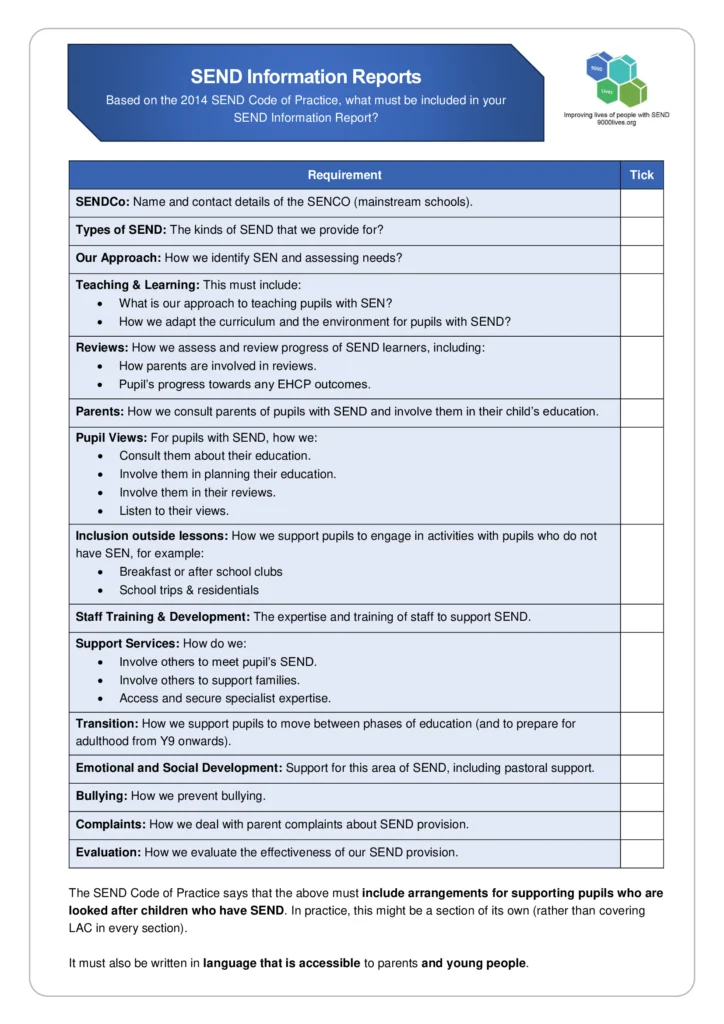
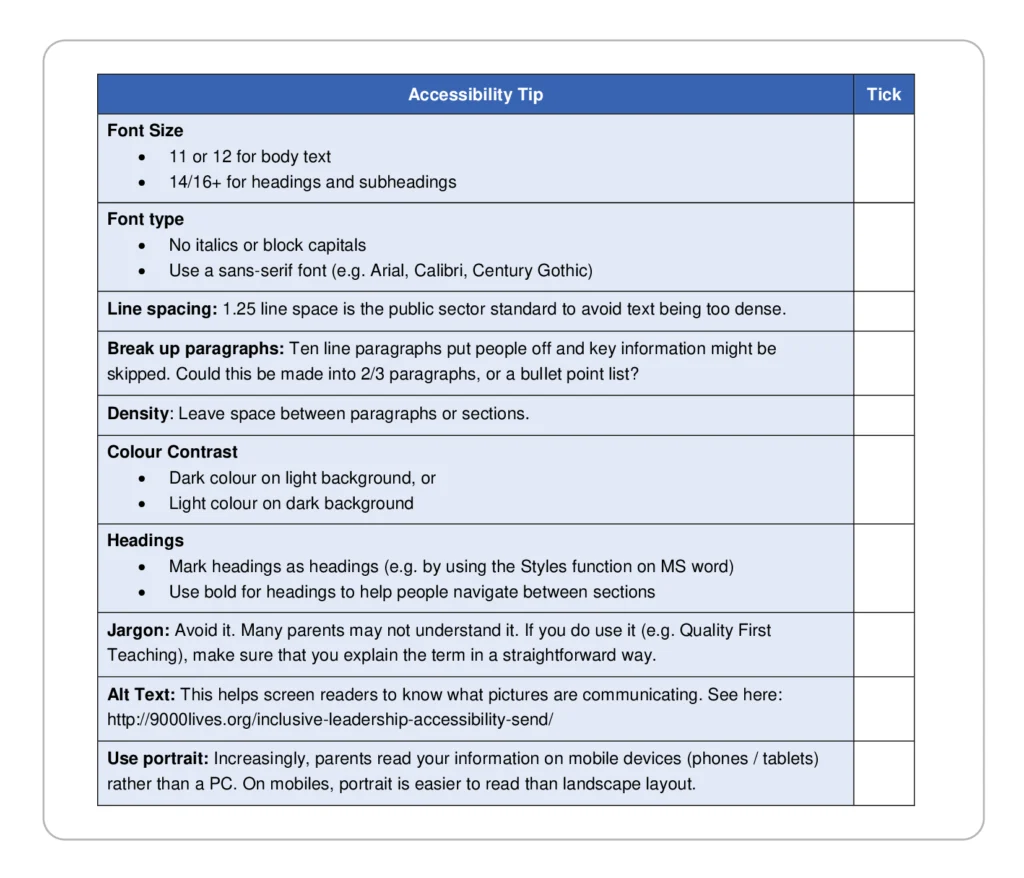
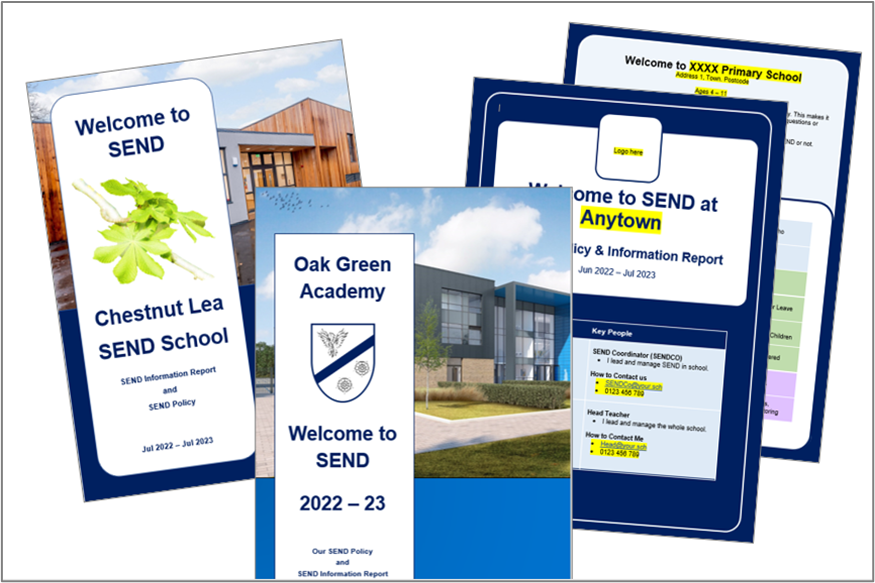
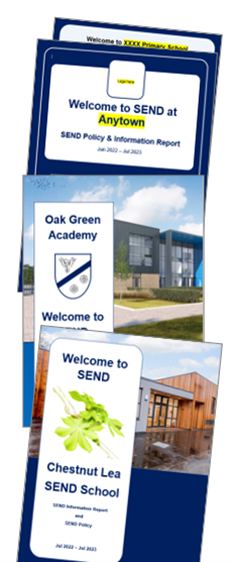
School SEND policies and SEND information reports should be combined and called something like ‘Welcome to SEND’. The content would stay the same, but it would be written so that parents can read it and it makes every effort to be presented in a way that makes parents want to pick it up.
The best great way of approaching the booklet is to think of it as a Prospectus for SEND.
3. Make inflationary rises in Element 2 SEND funding so that fewer pupils need an EHCP
Element 2 funding is used to support SEND of pupils who don’t have an EHCP. It is given to schools and has an upper limit (i.e. a school could typically spend this amount before they’d ask the local council for extra funding via an EHCP).
In 2014, Element 2 funding was £6000 per year.
In 2024, Element 2 funding is £6000 per year.
That £6,000 is based on calculations from a report written in 2009. If inflation was added, that £6,000 would be over £9,300 by September 2024. That’s a reduction of £3,300 in the upper limit of money for a SEND pupil.
To put it another way: In the north of England, £3,300 equates to 55 minutes of TA support or intervention (per day). That time might be used for 1:1 early support so that an EHCP is not needed later. It’s not that EHCPs are bad – it’s that if you need one, your needs are severe and there’s a big gap between you and you peers. Wouldn’t we rather that pupils had support early and that gap never became so wide?
The freezing of Element 2 has resulted in more pupils needing EHCPs.
If SEND provision for their child is working well, many parents would not mind whether their child has an EHCP or not. They are more concerned about outcomes. Often this means that their child:
Is doing learning well
Is happy
has friends
is behaving well.
With an extra £3,300, the needs of many more pupils could be met without the struggles that many parents report when requesting an EHCP. However, we should also face the reality that this might not be achieved. If not, at least adding an annual inflationary rise from this year on would stop Element 2 funding falling further behind.
4. Identify and implement the best bits of the SEND & AP Improvement Plan
Lots of work has been done by Department for Education civil servants, councils, school staff and families. Referred to as the Change Programme, it’s important to listen to feedback from schools and families and action the best bits.
For example, developing IT systems so that families can see the progress of EHCPs is welcome.
5. Consider how a national EHCP template will improve SEND outcomes
The roll out of any national EHCP would cost at least £6 million. Therefore, if it happens, it needs to be worth it and it needs to improve outcomes for SEND pupils.
Furthermore, a national template must be pupil and parent friendly. The current trial EHCP template is not. Therefore, it puts unneccesary barriers in front of some of those parents who we most want to support.
If we are developing a plan that helps people who have SEND, we must think how we can make it as inclusive of them and their parents (whilst also being compliant with the law). Some existing EHCP formats already attempt to do that. So, this isn’t as hard as it might at first seem.
Summary
Do: Publish where pupils go to school.
Do: Give guidance on how to write a great prospectus for SEND.
Do: Make inflationary rises in Element 2 funding.
Do: Roll out access to EHCP progress.
Do not: Roll out a new EHCP template unless it is pupil and family friendly and will improve outcomes.
The future is being written today…
This article was written to try and help to make a world that is as fair as possible. These five ideas will never be a complete answer to some of the tensions in the SEND system, but we do not need to have all the answers to begin the process of change.
Even more written evidence has been released by the SEND inquiry.
What is the SEND inquiry?
It’s a project by an influential committee of MPs to find great ideas to improve the SEND system.
Because previous reports on SEND have already outlined the problems, this SEND inquiry won’t spend much time on reviewing issues that are already well known. Instead it will explore ways to improve outcomes for children with SEND – hence the name ‘Solving the SEND crisis’.
Who could give evidence?
Anyone and everyone. The call for evidence closed on 6th February 2025. The early evidence caches have been mainly come from individual parents, schools and professionals, rather than high profile charities or trade unions.
What does the SEND inquiry evidence tell us?
The latest evidence from parents and professionals continues in a similar vein to earlier submissions: Tales of tension in the system. However, there are plenty of interesting ideas in the latest 27 submissions.
Three interesting submissions to the SEND inquiry
1. A parent spends £44,000 on tribunals
One parent has spent £44,000 on tribunals for her two children (one child in mainstream school and the other in a special school). After 14 years of experience of the system, the parent remains unhappy and outlines that, even after spending that vast amount, the required support is not in place.
Whilst calling for enhanced training for all staff so that lack of understanding does not cause long term impacts, the parent also focuses on the SEND processes:
EHCP processes should stop being adversarial.
Give an independent body power to pose penalties if performance is not good enough.
On tribunal costs, parents should be able to reclaim their costs from the local authority (LA) so that LAs are incentivised to deliver without the need for tribunal appeals.
The parent indicates that this would relieve some of the pressure on parents who currently bear the burden of challenging the system when it doesn’t seem to be working.
Furthermore, parents shouldn’t need to provide the same details to different services as it’s time-consuming and frustrating. Therefore, a single database should connect agencies across education, health and care.
A parent, who also works as an NHS manager, calls for radical changes so that teams all work together better. All teams would to be together in one new organisation. The organisation would include:
Speech and language
EHCP teams
Educational psychologists
LA SEND outreach teams
Social workers
Importantly, all the workers would use the same building, eat in the same lunch areas and they would park in the same car park.
Having an Integrated SEND Trust would be a way to break down the megalithic institutions of ‘health’, ‘social care’ and ‘education’. It would also consider standardising the pay bands for the different teams so that it was more equitable.
The impact for parents and schools would be that SEND diagnosis, advice and funding would all come from one combined, single organisation. Therefore, when concerns arise, the child accesses a single building where their needs are identified, a support plan is written and that organisation’s budget is used to implement the plan. No referrals; no funding applications; no High Needs Block; less bureaucracy.
The parent would only ever have to contact one service.
The child’s school would only have to deal with one service.
3. Give special school places without needing an EHCP
A primary school head submits that some children are so obviously in need of a special school that the EHCP process can hinder their access to the right school placement. An example is given of a child who the school believe needs a special school who, at age 5, is:
Working at a developmental level of a child aged 0 – 6 months,
Is spoon fed,
Is preverbal.
However, because the child was not picked up by early years services, the school must start the lengthy EHCP process from scratch. The head suggests that children with complex needs should be able to access special schools without an EHCP.
Additionally, the head identifies that a shortage of Educational Psychologists (EPs) means that the school is paying £900 for private assessments. She adds that the lack of EPs means that a child’s access to assessment depends on their school’s willingness to pay £900.
The SEND inquiry parent evidence is heavily skewed towards parents whose children have EHCPs. Parents whose children’s needs are met at SEN Support are under-represented. Also under-represented are families who have had a good experience of the system working for their child.
Furthermore, larger organisations (e.g. trade unions, national charities, local authorities and academy trusts) have not yet had any evidence published.
Finally, and crucially, there is no evidence from children. Whilst this may be due to the inquiry team declining to publish submissions from under 18s, another possible reason is that children simply aren’t being asked for their views.
This narrowed evidence base may be an issue that the SEND inquiry has to wrestle with when making their recommendations.
What happens next in the inquiry?
All the written evidence is read by civil servants before it is published on parliament’s website. The written evidence is then considered alongside the oral evidence that the committee hears in their face-to-face hearings. Then, things go quiet for a time as the committee and civil servants formulate their inquiry report which is published in autumn 2025.
Read more on the SEND inquiry
Check out our articles about the previous wave of evidence from professionals or parents:
The SEND Inquiry is an investigation by the Education Select Committee into how we can make the SEND system better in the both the short and long term. Also known as Solving the SEND Crisis, it has now released its first wave of written evidence. This article introduces the inquiry is and what professionals are saying so far. The article breaks down evidence into 2 groups:
A number of reports have reported a crisis in the SEND system. Therefore, the current inquiry focuses on making both short and long term improvements in the system so that experiences and outcomes for children become better.
Who did the SEND inquiry get evidence from?
Anyone who had a view. Schools, families, professionals, charities, young people… The call for evidence closed on 6th February 2025.
What are SENCOs saying to the SEND inquiry?
A fascinating range of school staff have submitted their views. Codes in brackets are the references from the inquiry’s publication list, where you can see the full submissions.
SENCo in independent school (SEN 44)
SEND teams need more expertise and should be back in the office to reduce some of the problems with decision making.
Teachers need more SEND expertise – the last big push was 2009.
There should be ombudsman fines for LAs who break rules.
EHCPs need to be less onerous and less adversarial.
SENCo in infants (SEN 36)
If we want more resource provisions in mainstream, there needs to be more training and funding.
We need to be more special school placements.
We need more SEND outreach support for mainstream.
Updated EHCPs need to come back faster from the LA.
Former SENCo who moved to a specialist setting (SEN 17)
Get rid of or support Local Authorities, but don’t leave them in limbo.
SENCos need better training on working with parents and this isn’t currently in the NASENCo award.
Get the curriculum nailed and you won’t have as many pupils needing SEND support.
SENCo in primary (SEN 03)
Change starts with SENCos.
Elevate all SENCO onto Senior Leadership and the pay band that this entails – an equal level to Assistant/Deputy Heads.
Have SEND departments, with admin assistants if necessary to support the SENCO. (there is huge inconsistency).
What are school leaders saying to the SEND inquiry?
Head of Primary (SEN 24)
The results of EHCP pupils in the overall school score is deeply unfair to children, families, staff and the very ethos of inclusion.
We need a system that reflects the true achievements of every child, regardless of their starting point.
Often, I have to explain why our outcomes fall short – this is often a process that is punitive, interrogative and demoralising. It undermines the dedication of staff and the aspirations of our families.
Until schools are not judged on standardised test scores, the SEND crisis will persist.
CEO of a Mixed Mainstream / Special Academy Trust (SEN 20)
Ofsted frameworks since 2010 have caused mainstream schools to become less and less inclusive.
Special schools should be 52 week placements and should all offer outreach.
Every LA, MAT and Diocesan Trust should be accountable for the representativeness of their student body.
School governor (primary) and volunteer MP caseworker (SEN 18)
Many pupils with EHCPs travel long distances (to us) because their local mainstream schools say they cannot meet need.
Being able to attend a local school with siblings and local friends is very important to all children’s social development.
Attendance at the head teachers’ LA inclusion forum is poor.
If a school has a resource provision, the results for resource pupils should be published separately to the mainstream-only pupils. If not, there is an unfairness upon schools with resource provision.
Also
College placements prevent parents from working full time (e.g. because the young person is only in 4 days a week).
Senior leader (Special School) (SEN 13)
Review all safety valve contracts.
Take note of the lack of capacity of the tribunal service and LAs to provide evidence – in the context of the rising proportion of parental success in tribunals.
Consider reviewing the SEND Code of Practice.
School leader or teacher (SEN 11)
SEN fraud is an issue (example given re £65,000 EOTAS request for a child who stays up all night gaming).
Too many ‘SEN specialists/warriors’ are fuelling parents who are playing the game.
LAs need to better hold independent schools to account for their educational quality, staff training and their fees.
Ofsted should check that qualified teachers are teaching our pupils with SEND who are in independent schools.
Head of Primary (SEN 07)
EHCP funding needs to actually match the cost of education for that child.
There is an ongoing tension between early parenting challenges and identifying genuine SEND needs. Greater early parenting support might address some issues but is not always readily available.
Deputy Head of Junior School (SEN 02)
Tighten up diagnosis process so that its accurate in order to reduce numbers.
Mentor or greater support for new SENCOs (too many leave within two years).
SENCOs on Senior Leadership Teams of schools so have influence.
Monitor and challenge special schools so that they admit SEND pupils (and don’t leave them in mainstream).
What are SEND specialists saying to the SEND inquiry?
The big five themes are:
Money
Workflow
Training
External support
Accountability.
SEN Manager (SEN 52)
Funding and training for SEND must be better.
Disability Advocate (SEN 48)
Waiting times for children’s mental health services are too long.
It is not uncommon that schools claim funding for specific support hours for a pupil (e.g. 25 hours) but distribute this among other students who lack formal provision.
Some schools have been found to treat SEND students unfavourably or discourage their enrolment. This skews school performance metrics.
SEN Outreach Teacher (SEN 47)
TAs pay is a barrier to attracting and retaining staff with experience and skills.
Only one course in England offers the mandatory Qualified Teacher of Visual Impairment (QTVI) qualification to teach blind and visually impaired children. Many QTVI’s are due to retire in the next 10 years and this is a problem.
SEND Manager (SEN 43)
Improve workload to improve retention of teachers, SENCos, and early years staff.
Create national advice templates for professionals to use when writing EHC assessment advice.
Remove Educational Psychologists from EHC assessments.
Give LAs the power to hold schools accountable for SEND.
SEN Outreach teacher (SEN 34)
Ofsted don’t visit enough – Give regional Advisory Teachers powers to enforce reasonable adjustments.
For more complex pupils, offer existing schools the fees charged by an independent special school (e.g. £60,000) to develop in house solutions.
Flat Stan First Aid (SEN 26)
Teach CPR to children who have SEND.
Inclusive Solutions UK Ltd (SEN 09)
SEND needs to be more person centred.
Develop inclusion teams.
Fit 2 Learn CIC (SEN 05)
Hearing checks for all pupils (by age 7) and eye checks for all pupils (by age 8).
Have more PE.
What do the trade unions say will solve the SEND crisis?
In the first wave of evidence – Nothing. However, it is likely that they will contribute to the inquiry and so their evidence is likely to arrive before the consultation closes.
Trade unions (e.g. ASCL, NASUWT, UNISON) have a good track record of responding to consultations. It will be interesting to see how creative they are – they have an opportunity to offer novel solutions given that they have access to hundreds of thousands of school employees. An excellent submission is likely to be technical (e.g. pointing out bottlenecks in training for sensory impairment specialists) as well as offering views on funding and training.
Whose voices are missing from the SEND inquiry?
Children
Teaching assistants
These are very large omissions and we hope that this is addressed before the inquiry concludes.
What is the 9000 Lives response to the SEND inquiry
SENCo time needs to be focused on pupil outcomes and support and not admin. Examples of how we can free up SENCos to spend more time working directly with pupils and staff:
Simplify SEN support plans to make them more focused.
Avoid adding new laws to the SEN support tier.
Avoid mandating a new EHCP template.
Stop spending time creating medium term outcomes.
Regionalise SALT referral forms & processes.
Produce a DfE guide to how schools should better communicate with SEND parents – especially regarding their SEN information report.
Increase the £6000 element 2 funding by inflation each year.
Allow LAs to direct placement of children in care.
Provide governors, trustees and inspectors with data on how successful a school is in attracting pupils with SEND from within and beyond its own catchment.
Solving the SEND Crisis: What happens after written evidence is gathered?
After written evidence is gathered, oral evidence sessions take place. These allow the committee’s MPs to explore the issues in more detail. Finally, the MPs publish a Solving the SEND Crisis report for the government to respond to.
Many people see SEND as an urgent issue. However, the report (and government response may not come until late 2025 or even eary 2026).
Solving the Special Educational Needs (SEND) Crisis is an inquiry by the Education Select Committee. The first wave of written evidence was released in January 2025. This article summarises what the inquiry is and the first wave of evidence from parents.
What is the Solving the SEND Crisis inquiry about?
In recent years, a number of reports have pointed to a crisis in the SEND system. Therefore, the inquiry focuses on achieving both short term stability and long-term sustainability in the SEND system so that outcomes for children are improved.
Who could give evidence to the SEND Inquiry?
Anyone. Schools, families, external experts, charities… The call for evidence opened in December 2024 and closed in February 2025.
To discover out what professionals said, read a summary of the first wave of responses from schools, and SEND professionals.
Which MPs are on the inquiry?
Helen Hayes MP is the Chair of the Inquiry. Helen is a Labour MP who was first elected in 2015 and who served as the Shadow Minister for Children and Early Years (2021 – 2024). Both of these roles have introduced her to the tensions that are found in the SEND system.
The committee includes ten other MPs:
Jess Asato (Labour)
Sureena Brackenbridge (Labour)
Amanda Martin (Labour)
Darren Paffey (Labour)
Mark Sewards (Labour)
Dr Marie Tidball (Labour)
Dr Caroline Johnson (Conservative)
James Cleverly (Conservative)
Manuela Perteghella (Lib Dem)
Caroline Voaden (Lib Dem)
The committee have varied backgrounds and include former teachers, disability and health campaigners.
What have parents said to the SEND Inquiry so far?
Common themes are
Staff training
Funding
Inclusion in mainstream schools
Access to SEND specialists
So that we can clearly see the less well-voiced ideas, those themes are excluded from the following list.
No parent asks for more paper, but they do want the existing paper to work harder (e.g. better EHCP usage or quicker referrals).
Here’s a summary of parental responses so far. NB: Codes in brackets (e.g. SEN 51) refer to the select committee’s evidence site where you can find the full submissions.
Parent and teacher trainer (SEN 51)
Start SEND training when teachers are trainees.
Independent schools play an important role.
Children are not numbers and funding should not drive decision making.
Parent (SEN 49)
Risk aversion can get in the way of effective support for physical difficulties.
Schools need to be quicker to respond to new disabilities (e.g. due to brain injury).
Parent (SEN 46)
Special Schools should offer wraparound care. Typically, they don’t and this creates hardship for parents who can’t hold down jobs (unlike parents of pupils in mainstream who can access wraparound care).
Parent (SEN 30)
Prioritise thousands of pupils whose needs fit between mainstream and specialist.
Provide smaller mainstream schools for pupils showing signs of sensory overload and neurodiversity.
Parent (SEN 25)
Have stricter regulation of the independent sector.
There remains a strong belief that parents are not the experts on their child. There needs to be a conscious effort to change this culture and narrative.
Parent (SEN 23)
Remove responsibility for SEND from LAs completely.
Do not put SEN Support on a statutory footing as it would create more hurdles for parents.
Provide training on the law for schools (e.g. from IPSEA).
Abolish private special schools.
Abolish EHCPs in favour of a reasonable adjustment passport.
Parent (SEN 21)
Stop money draining away via tribunals, 1:1 support and additional provision.
Use the savings to decrease class sizes and upskill staff.
Parent (SEN 16)
The autism education system is skewed by the views of an articulate and verbally-privileged group high up on the spectrum, who themselves largely didn’t need SEND education. This group does not represent the autistic community, certainly not at my son’s end of the spectrum (pre-verbal).
Therefore, my son has the same diagnosis as newly-diagnosed newsreaders or celebrities, who have families and careers and acquire a diagnosis of autism in adulthood.
It’s traits, not a disorder, for many such folk – the word autism is being stretched so far as to have become meaningless. It will be a brave government that dares to talk about over-diagnosis of autism and ADHD.
Parent (SEN 15)
The SEND system fails everyone. A public inquiry is needed.
Attendance and exclusion rules discriminate against or criminalise parents of disabled pupils or the pupils themselves.
Parent (SEN 14)
SENCos and parents waste an excessive amount of time on the paperwork that has to be completed for children.
As a single parent, working full-time with 3 children with SEND, I can’t quantify the time I have wasted filling out forms.
Parent (SEN 12)
Shorten waiting times for EHCPs.
Improve accountability.
Parent (SEN 08)
Smaller schools should be the norm.
Open schools that allow pupils to focus on their future at an earlier age choosing subjects that excite and challenge should be the norm.
Look to Finland.
Parent (SEN 06)
EHCP processes need improvement and more consistency.
The government should reimburse schools for the actual cost of supporting high needs pupils.
Parent (SEN 04)
Visit Huxley School (they are trauma informed and do flexi schooling).
Look at the Not fine in School Facebook group.
Solving the SEND Crisis: What have parent organisations said?
Notably, the first wave of evidence is from individuals or smaller organisations. The inquiry has not published any written evidence from parent organisations or charities yet. However, bigger organisations often have longer chains of decision making and it is likely that their submissions are in the pipeline.
Solving the SEND Crisis: What happens next?
Oral evidence sessions follow the written evidence. These sessions allow the committee’s MPs to explore issues in more detail. Finally, the MPs publish a Solving the SEND Crisis report for the government to respond to.
Many people see SEND as an urgent issue and, whilst the response may come in the summer term, it might not arrive until early autumn.
In 2022-23, 682 people behaved so badly that a court handed them a football banning order.
What is a football banning order (FBO)?
It’s a court order that, since 1989, has allowed fans to be banned for offences such as:
Violence
Pitch invasion
Throwing missiles
Public order offences (including racism and tragedy chanting)
Drink driving on the way to or from a game
Ticket touting
More recently, the laws have been updated to also reflect online offences (such as sending racist abuse via social media), more drug offences and to better cover women’s football. Unsurprisingly, some offences are more common that others – violence and disorder are the most common reasons.
Football clubs can ban anyone from their own stadium, but Football Banning Orders can only be made via a court.
What does a ban cover?
The individual will be banned from all games involving teams in the top six leagues of men’s football, top two of the women’s game as well international matches.
In some orders, extra measures are taken. These can include not being allowed within a certain distance of the ground on match days, or having to hand in a passport when the national team are playing abroad.
How long does a football banning order last?
Generally, bans last for up to 5 years. However, if someone is jailed for their behaviour, then the court can ban them for even longer.
How many football banning orders are given out?
About 700 in the 2022-23 season.
It’s hard to say what’s driving the more recent spike. However, the lack of attendance at matches during COVID is a likely factor: During this time, some banning orders will have expired. The spike in orders may be in part due to the authorities playing catch up (and rebanning some repeat offenders).
Who gets banned?
The details of every ban aren’t recorded – but of the FBOs where it has been recorded, it’s men. A whopping 99.4% of new orders went to men. The 18 – 34 age range is the most likely to be banned.
Which club has the most banning orders?
Let’s be honest – you’ll look at the next chart to see if it includes your football rivals. The truth is that size of club generally is a bigger factor than the reputation of fans. Typically, bigger clubs have more fans and so risk more incidents where there’s bans.
At the end of the 2023 season, the premier league table looked like this:
Outside the Premier League, Millwall and Birmingham City lead the pack. However, it’s not as simple as they have the fans with the worst behaviour – it might also be that other clubs turn a blind eye more often than these clubs.
What does this tell us about behaviour of young men?
It’s tempting to draw conclusions about the behaviour of young men getting worse (because more of them are getting banned). Notably, the uptick since Covid is similar to a rise in suspensions in our schools. However, due to the fact that there may be some catch up going on, it’s still too soon to draw those conclusions. Furthermore, it may be that more reporting and better quality evidence (e.g. more mobile phone footage) are contributing to the rise.
What’s the future?
Football banning orders have existed since 1989 and they are here to stay.
As time passes, will fans be even more willing to report racism and homophobia? If so, the number of banned fans will rise, because the football community will report bad behaviour more often.
The public are more willing to use smartphones to film abuse or violence, providing evidence that makes it increasingly hard for criminals to avoid detection.
It will also be interesting to see whether authorities react more strongly to end of season pitch invasions that are still an annual sight despite their significant dangers.
You may also be interested in…
Check out these articles or pick your own from our well researched library.
How are we getting on with school suspensions in England’s schools?
Here are seven key points from the latest Department for Education data on school suspensions.
There are 8.5 million pupils in England’s schools that form part of the data.
1. Suspensions are higher than pre-Covid and are rising fast
Suspensions dropped during the two lockdown years. Then, in the early post-pandemic period, there was some catching up to do with behaviour and social skills. So, it’s not surprising that suspensions rose after lockdowns ended. However, they continue to rise steeply.
Can the continuing growth be because of Covid? If not, what other factors are driving the increase?
2. School Suspensions are not only an issue for secondary schools
Suspensions have grown in every year group since pre-Covid. However, they have grown at different speeds in different year groups.
Foundation Stage and Y1 have seen the fastest growth in suspensions, up 64% compared to pre-Covid rates, albeit the number of suspensions is still lowest in these year groups. In fact, suspensions are up in every single primary year group. Therefore, suspension rates are not only an issue for secondary schools.
In fact, when we look at the pattern of suspensions in FS/Y1 and Y8, the relative growth is almost identical.
Remove the titles and you’d struggle to tell the difference. Suspensions rising fast amongst our youngest children is a worry.
3. Who gets suspended?
Boys vs Girls
Boys are suspended much more than girls, but look at how the orange section changes between primary and secondary.
The change in the proportion of girls who are suspended in secondary school is partly due to an increase in suspensions for disruptive behaviour in secondary (rather than violence).
At first glance, a surprising proportion of special schools suspensions are boys. However, 70%+ of our special school pupils are boys so it’s not a surprise that more boys are suspended. Also, boys are 85% of special school pupils with SEMH (SEMH is the most often suspended SEND).
Free School Meals (FSM)
Children from hard up families are also more likely to be suspended. Almost 25% of our pupils were eligible for FSM, yet almost 50% of suspended pupils were eligible for FSM.
Even if a pupil is not eligible for FSM, household income makes a difference: Suspension rates fall as wealth increases.
Ethnicity
Suspension rates vary between different ethnic groups. Some of this correlates with deprivation (i.e. some ethnic groups experience more deprivation than others). We can see this when we look at suspension rates and eligible for FSM together.
Whilst deprivation explains some variation, it doesn’t explain it all. Therefore, we should redouble our efforts in this area – especially with traveller families.
4. Why do pupils get suspended?
Schools list one or more reason for the suspension. In both primary and secondary, the top reason given is persistent disruptive behaviour. In special schools, it’s assault against an adult.
5. Is the growth of school suspensions driven by a handful of secondary schools?
There are some schools that have very high suspension rates. They tend to:
Be in an Ofsted category of requires improvement or inadequate
Serve areas of higher deprivation (though not always the case)
Have a high number of vacant places
Have had a recent change of head teacher.
Such schools are a factor in the rise of suspensions. However, they are not the full story. That’s because the rises are too big for it to be those schools alone. In fact, suspension rates increased in almost 70% of secondary schools.
This graph shows how suspension rates are decreasing vs increasing. It’s a bar chart with 3410 bars – one for every secondary school. It shows the two parts of the trend very well (30% of secondary schools suspending fewer pupils, and 70% suspending more pupils).
6. When do school suspensions peak?
News stories can sometimes give an impression of ‘crack downs in the new school year’. However, the data doesn’t show any such September spike. In fact, suspensions come in half-termly waves – followed by a summer ripple.
Other interesting points from this graph, based on 2023-24 DfE attendance data:
Overall, school suspension rates were higher in spring than autumn.
Suspensions peak on Fridays.
The longer the school holiday, the more suspensions fall. Does staff or pupil fatigue cause suspensions? Would a shorter summer break and longer breaks during the year help us manage behaviour?
May Day bank holiday seems to reduce suspensions for the next two weeks.
7. Are rising suspensions because of societal changes?
If societal change is causing more suspensions, might this be reflected in police data? After all, issues that affect pupils in school will affect them outside of school as well.
The data doesn’t support the idea that social change is driving our higher suspensions:
The number of young people being arrested has fallen since 2013.
For 10-17 year olds, they fell during covid and haven’t yet returned to their pre-pandemic levels.
Furthermore, special school suspensions have not shown the same pattern. If societal changes were a significant factor, wouldn’t they also affect suspensions from special schools?
Conclusion
Compared to the last 17 years, our suspensions are very high. The rise is showing no sign of levelling off, rather it seems to be accelerating.
These rises affect some groups more than others. That is because we suspend a higher rate of:
Boys
Y9s and Y10s
Pupils who are more disadvantaged
No one has all the answers. The idea of suspensions isn’t bad: Sooner or later, all head teachers will be faced with the tough decisions to suspend pupils. But, the data does pose questions, such as:
Is suspension becoming normalised?
How many pupils would we suspend before it is ‘too high?’
When should we expect strict behaviour policies to have an impact which shows in the data?
The DfE governance guides for maintained schools and academies advise all schools to complete a governing body self-evaluation. As a result, most boards do an annual audit to highlight their strengths and development areas.
This is often done in autumn term and there are a several good tools for a governing body audit:
A small team of governors meets and discusses the responses.
The board plans to change its composition.
The board wants to identify very specific skills gaps.
However, a downside can be the length of time needed to complete & collate the paperwork.
Some governing boards need something that is focused and quick. Something that takes the temperature of where we are and then looks to the future. Our free governing body audit tool does just that: a short audit of strengths and areas for development.
Governing body self-evaluation: Three issues to avoid
Before you start, think about what might prevent you from being successful in this task. Assuming that it does not need to be the Chair or Vice Chair who leads this, the most common barriers to successful self-evaluation are:
1. You are swamped with information
Avoid this issue by avoiding audits with 109 questions.
2. They take ages to collate
Avoid this issue by avoiding audits with 109 questions.
If using our self-evaluation, use a blank copy of the form to collate responses.
3. You are still waiting for responses after the deadline
If you meet face-to-face, give out paper copies at the start of a meeting and allow the first few minutes to complete it. Collect them in there and then.
Do not let anyone leave until they have given you their audit. A hostage situation? Yes. Effective? Also yes.
If you meet online and your next in-person is not for some time, you will need to use email – but still bring it up at your online meeting. Follow these three steps.
It’s friendlier to nag before the deadline than after. Helpfully, Gmail and Outlook let you schedule email so you don’t forget.
If you still don’t get a 100% response, push ahead anyway. When you report, give a list of governors who you got responses from – this helps show the proportion of replies from parents, staff or other governors.
Draft your targets
When collating responses, group comments around emerging themes (e.g. Finance; English; Getting evidence from a wider range of sources). This will help your board members to process the outcomes and will also make it easier to plan your next steps.
Don’t worry if:
You end up with a theme called “Miscellaneous” as some comments will not fit anywhere else.
Comments overlap more than one theme. Choose the ‘best fit’ for each comment.
Not all comments are strategic (they can still help us improve).
You can use your themes, plus inspection reports, pupil outcomes and external feedback (e.g. from school improvement advisors) to draft a small number of targets for the governing body.
Is “Recruit more governors?” a target?
You should aim for targets to link to the three core roles of governors. Therefore, you should be cautious about setting a target of “Recruit more governors”.
If you have a large hole in your budget, “Recruit a governor with financial expertise” might be ok (if you have this as a skills gap). However, a stronger target would be “The governing body will effectively support and challenge school leaders to return the budget to a balanced position.”
Any targets might be broken down into smaller steps. When you are ready to look as specific actions, here’s a worked example for this safeguarding target:
“We will have outstanding safeguarding knowledge and use it to effectively hold school leaders to account.”
Our safeguarding governor will visit school at least 3 times in next year, including to meet DSL, review Single Central Record and to meet school council.
Our governors will be invited to whole school safeguarding training (Term 1b).
DSL will provide GB briefing on multi-agency work to tackle County Lines in our local area (Term 2a).
When writing the safeguarding action plan, school leaders will include focused GB monitoring activity (Term 1a).
Online Safety lead to provide GB briefing on the design and impact of our computing curriculum (Term 3b).
DSL will meet our 3 new governors to deliver safeguarding induction (Term 1a).
You don’t have to have targets. It’s up to you and your board. If your governing body doesn’t plan to have any targets, you must still feedback the audit results to the whole board. If you do not give feedback, don’t expect governors to complete it next year (as volunteers are less likely to engage in activities if any outcomes are not shared with them).
Feedback your governing body self-evaluation to the board
You are now ready to feedback to the rest of the team on the Governing Body Self Evaluation. Include any proposed targets and listen to any feedback.
Typically, the Chair or Vice Chair leads on developing any action plans, but it could be anybody: Leadership comes in many forms.
Aim to mention it when the opportunity arises. For example “It’s really good to see governors in school more – that came up as a weakness in the audit. So it’s good to see that we’re tackling our own development areas.”
Finally, redo your governing body self-evaluation in 11 months – then you can see the progress you’ve made.
In 2011, the academy schools programme took off, but where are we now?
It has slowed, but that is hard to see from the overall numbers… So, let’s dive deeper into academy schools and academy trusts and what’s happened since Tony Blair opened the first academy in September 2002.
1. Academy Schools Today
During the noughties, there were no primary or special school academies and less than 200 secondary academies. From 2011 onwards, changes of government policy changed that and the number of academies (of all three types) rose steeply. There are now over:
6800 primaries that have become an academy
2300 secondaries that have become an academy
380 special schools that have become an academy
2. Primary Academy Schools
Ministers wanted all schools to be academies by 2022 (Rt Hon Nicky Morgan) and then by 2030 (Baroness Barran), but both plans hit the rocks. So, it’s unsurprising that primary conversions have slowed (even before Covid).
Notes
2023 is only part year data – so the total will be higher.
Some academies have changed trusts. If so, the data shows when they last became a new academy (rather than when they first became an academy).
Includes convertor and sponsored academies. It does not include free schools.
3. Secondary Academy Schools
The secondary peak was 6 years before the primary & special school peaks. During the secondary peak in 2011 and 2012, almost a third of secondary schools converted in a two year period. This represented about a million pupils no longer in a local authority school.
There are now only 20% of secondaries that remain local authority (LA) maintained, so it’s understandable that conversions have slowed to a few dozen a year.
4. New Special School Academies
The special school picture is almost identical to primary:
A later start
Highest numbers in 2017.
A more recent slowdown in the number of new academies.
5. The Pipeline of Academy Schools
What happens next? Will the lower numbers continue?
Interestingly, there are 767 schools in the DfE ‘pipeline.’ These are schools that are in the process of becoming an academy and the majority are primary. This suggests that future growth will continue to be mostly in the primary phase.
6. Who will convert in future?
The number of secondaries left to convert is in decline. Some areas have no secondaries left to convert (e.g. Hull, Middlesboro, Doncaster). Of the remaining LA maintained secondaries, some have chosen to stay maintained (e.g. King Edward VII in Sheffield where a campaign stopped forced academisation in 2023).
Therefore, it looks like any growth would mostly come from the primary phase, where over half of the 16,800 schools remain LA maintained:
7. What about Trusts?
This graph shows the size of 1300+ academy trusts (all of them apart from the biggest 8 trusts which fell off the end of the graph – more on them later).
The most common trust size is 2 schools and 55% of trusts have 5 or fewer academies. Whilst the huge trusts pop up in the news more often, there are only a few dozen, whereas there are over 1000 trusts with 10 or fewer academies.
Based on the schools in the current pipeline, it looks like many will join small or medium sized trusts. However, the DfE pipeline only names trusts for sponsored academies (so omits convertor academies). Therefore, it is a narrow data set.
It will be interesting to see how the size of trusts change over the next five years (e.g. will more single-academy trusts merge into other small or medium trusts, will medium sized trusts decide to stick within their region (and avoid expensive four hour round trips between HQ and far-flung schools) or expand more widely?)
8. The Ten Biggest Multi-Academy Trusts in 2023
Whilst there are not many huge trusts, these trusts are still resolutely growing. This brings us onto the biggest trusts.
We could rank by:
Number of schools in the trust
Number of pupils in the trust.
Here’s the top ten based on the number of schools in the trust:
9. Small Academy Trusts
There are new trusts forming but it’s only a handful a year. In 2022, there were only 5 new trusts formed.
So, with a few exceptions, the days of starting your own MAT are over. That means that schools academising will join an existing trust (rather than starting their own).
10. What might affect conversions to become an Academy School?
Whether schools convert to try to avoid being closed down as falling pupil numbers bite in both primary and later secondary schools.
Whether tighter school funding makes schools consider joining a MAT.
Whether Local Authorities set up their own academy trusts in future.
Whether any new Ofsted framework means more schools face forced academisation.
Policies of the UK Government after the 2024 election.
References: Data is from the Department for Education academy data with occasional data from the DfE School Census (e.g. overall number of primary schools).
Image credits: 9000 Lives
Need help with inclusion in your council, trust or school?
What does Ofsted guidance say about SEND information reports?
Ofsted do not have a lot to say on this topic. However, their School Inspection Handbook (updated Sept ’24) lists tasks that the the lead inspector will complete before your inspection. This list includes “review and consider information about SEND provision (for example, SEND information report…)”
Therefore, ensure that your SEND information report is compliant and accurate.
The duties from the Equality Act 2010 (e.g. need to make reasonable adjustments, making anticipatory adjustments), overlap with SEND.
In practice, we do not hear of many SENCos being grilled by inspectors on the quality of their SEND information report. If we publish an excellent report, it does not matter if an inspector looks at it (or not). That is because an excellent report is something that benefits pupils, families and staff.
If you want to see what excellence looks like, check out this article on how to write an outstanding SEND information report.
What do NASEN say?
NASEN are a well-respected charity who give excellent advice to schools. In their book, The Governance Handbook for SEND and Inclusion, they say that “Best practice goes beyond basic requirements and ensures documents are as accessible as possible.”
Therefore, you might also include:
Access arrangements (e.g. SATs, GCSEs)
Has the SENDCo completed their NASENCo?
Glossary of Terms (as a separate document)
Accessibility
Make your document better for those with reading or visual difficulties with these tips:
A SEN information report or a SEND information report?
You may see SEND information reports referred to as SEN information reports. That’s because the Children and Families Act (2014, section 69) omitted the D in SEND. Therefore, any documents that are titled SEN information report are acceptable.
In practice, most schools combine both SEN and disabled children together under the heading SEND. Therefore, using SEND in the title is also acceptable as it covers the broader group of pupils.
Much more important than the wording of the title is that you ensure that your document is compliant, accurate and accessible.
Do you think that your writing is accessible to people who are dyslexic or have a visual impairment? If so, you are probably wrong.
The good news is that some of your current habits are easy to change.
This article tells you how.
Why do we need to make our writing accessible?
The Equality Act means that you have an ‘anticipatory duty’ to make reasonable adjustments. That means you should fix problems that you can reasonably predict.
The British Dyslexia Association indicates that 10% of adults are dyslexic. Meanwhile, the National Literacy Trust believe that 8 million adults in the UK have a reading age of 11 or below.
Up to 4% of the population relies on some sort of assistive technology because of a visual impairment (VI).
This can include:
Screen reading software
Refreshable braille displays
Screen magnifiers
Because so many people are affected by dyslexia and visual impairment, you can reasonably predict that you need to make your writing easier for them to read.
These eight tips and your info will be more accessible for your readers with both dyslexia and VI.
1. Accessible Fonts
A serif is a small decoration to finish off letters.
Serif fonts include these decorations. The extra detail makes the fonts less readable. Avoid serif fonts such as Times New Roman.
Instead choose a sans-serif font. Sans-serif means “without serif”, so without the decoration that makes the font harder to read.
Some schools use cursive fonts (these look like handwriting). However, these are harder to read and so make an extra barrier. When it comes to whether you should use cursive fonts or not, the answer is simple: Do not use them.
2. More accessible font tips
These next tips are ‘quick wins’ as they need almost no effort to start using today.
Bold? Yes. This highlights key info and is more legible.
Underline? No: It’s harder to read.
Italics? No: It’s harder to read.
Size? 14 or 16 for headings. 11 or 12 for your main text.
Line spacing? Avoid single line spacing. Go for 1.25x so that words are less cramped.
Text in capitals? No: It’s harder to read.
3. Use a good contrast
A good contrast means:
Dark text on a light background, or
Light text on a dark background.
Bright colour combinations can make text uncomfortable to read. You should never give your reader a headache!
Also, to avoid making your work harder to read for people who are colour blind (better known as colour vision deficiency). That means you need to avoid certain colour combinations:
Red and green and brown;
Purple and blue;
Grey and pink;
Grey and brown
Most of these colour combinations are uncommon simply because the combinations look ugly. That makes them easy to avoid.
4. Use accessible headings
Word has Headings 1 to 5. They add invisible code that helps screen reader users skip between important bits. Use them.
Always use Heading 1 for your main title. Then use Heading 2 & 3 for subheadings depending on how important the subheading is. You’ll not need Heading 4 or 5 unless you have a complex document.
In Word, you’ll find headings in the Styles section:
If you find this turns your headings light blue, that’s easy to change. Just right click on your Heading 1, 2, 3 etc and then click modify:
Once you click modify, simply pick your font, colour, size and bold.
5. Add Alt Text
This means adding a description to any picture you use. Think about describing the image to someone over the phone: What does it tell you.
If you use more than 25 words, you are going on too long.
Be short and sweet with your description.
Right click on image.
Click Format image.
Click Layout and Properties.
Add your text.
Sense, a charity that supports blind and deaf people, have written a great explanation of how to inclusively deal with images. Click here to read it.
6. Use an accessible document format
Word documents and pdfs are safe choices.
However, pdfs are only accessible if you have saved the document as a pdf. If you have a scanned document that is a pdf, then it this will look like a photo to a screen reader. Screen readers cannot ‘read’ from photos and, when asked to interpret an image, it will say “Empty document.” Needless to say, this is no help to a blind person.
7. Easily convert Word docs to pdfs
Following on from point 6 (i.e. never print your word doc and scan it to make it a pdf)…
If you have written a word doc, it’s easy to convert it to pdf.
In the File menu, click Save As.
Then click Save as type.
Select PDF.
Click Save.
8. Keep sentences short
When writing for the public, UK government departments have a rule – no more than 25 words in a sentence. That’s because the longer the sentence, the less people understand it. Dyslexic people often have difficulty processing information. When you write long sentences, you just make it harder for them.
When your average sentence length is 14 words, research suggests that people understand 90% of what they have read. At 43 words, this drops to 10%.
UK government says that sentences of 11 words are considered easy to read, while those of 21 words are fairly difficult. At 25 words, sentences become difficult, and 29 words or longer, very difficult. This is a wake-up call if you routinely publish documents that are very difficult for people to read (even those who don’t have dyslexia or visual impairment).
Summary
Publish in Word or non-scanned Pdf
Use Word’s tools to mark headings as headings
Add Alt text for images
Use size 11 serif font for your main text.
Use headings (e.g. size 14-16 in bold text).
Only use font colours that have a good contrast with the background.
And finally, write shorter sentences.
What if I don’t have time to check all my documents?
No one has time to check all of their documents so decide what is most important. In a school, your first priority might be a newsletter template.
See this as a three year project and make improvements when a document or policy is reviewed. Many steps are easy (e.g. switching to a sans-serif font, using size 11, avoiding scanned pdfs). Harder steps (like reducing the complex language used in a policy) can be made easier by using A.I. (e.g. can you convert this paragraph so that it has a reading age of 9 years old).
Want to test how accessible your own writing is?
If so, you can try a screen reader. There are several free options but a good one to try is NV Access screen reader – click here. For a fuller experience, close your eyes when using it.
Surprisingly, the first step to writing an outstanding SEND policy and SEND Information Report (SIR) is to decide which one you want to bin? The two documents duplicate each other. As the SEND Code of Practice mandates what must be in a SIR, it is best to keep that (and simply paste in any extra parts of your SEND policy that you want to keep). Your new document is your “Combined SEND Policy & Information Report.”
Whether that idea makes you excited or leaves you cold, read on…
Five steps to writing an outstanding SEND information report
Combine your SEND Information Report and SEND Policy.
Use pictures (to engage readers).
Write in plain English (i.e. with a high level of readability).
Use a clear font.
Adopt good habits.
1. Why combine the SEND information report and SEND policy?
It benefits the people who need to read about SEND at your school (e.g. parents, staff). It pulls more of your SEND information into one place and, as the SENCo is now doing one document (rather than two), they can spend more time making it clear to read. This helps whether the reader is a new staff member, a parent who has literacy difficulties, or a parent who speaks English as an additional language.
Are we allowed to combine our SEND Information Report and SEND Policy?
“The (SEND Information Report) can be included in your SEN policy, or presented as a separate document.”
“The SEND policy does not have to be published as a separate stand-alone document.”
If you need a document for colleagues to prove that combining these documents is allowed, click to download “Is it OK?” (an A4 briefing). This download also includes the Ofsted position on the topic.
Some local authorities also have a document called ‘School’s Contribution to the Local Offer.’ This can also be combined into the same document so that parents and staff get all the information in one place.
Quick Tip: Use ‘SEND’
When you first use the term ‘Special Educational Needs or Disabilities’ add ‘(SEND)’ afterwards. After that, just use ‘SEND’ as it is quicker to read.
2. Use pictures in your SEND information report
Pictures break up text and give the reader a momentary rest. Whether it’s to show your school’s size (with a Google Earth image), or a simple fiddle toy, pictures can quickly convey useful information.
Also, pictures can signal your values – e.g. happy primary pupils playing Shark Top Trumps to signal that you know that social skills are important for autistic pupils. Smiling kids and great white sharks help to keep people reading.
It is hard to include images of SEND pupils. After all, the SEND status of a child is private. A quick-fix is to include this statement early in your document:
“Our photos of pupils are chosen regardless of whether they have SEND or not. This is inclusion.”
This then allows you to use photos of pupils from your school website or prospectus.
Alternatively, Pixabay offers thousands of free images, and you can use them without copyright worries. Their photos and illustrations, once added to your work, can quickly show the reader the topic of a page.
If you need even more choice, then unsplash.com also offer copyright free pictures.
3. Make your SEND information report easily readable
The Flesch reading ease score is a way to find out if you have written in plain English. It is free to use and is even built into in Microsoft Word – you just have to click the right buttons to discover it.
The Flesch reading ease score is a mathematical formula that scores text out of 100, where 100 is easiest to read. Here’s a few examples of Flesch scores:
100 = Cat in the Hat
90+ = Fantastic Mr Fox
80+ = Boy by Roald Dahl
70+ = A Barack Obama speech
60+ = A typical BBC news website story
50 ish = Stephen Hawking’s Brief History of Time (first 2500 words)
30 ish = Academic paper on the transmissibility of new COVID variant
When writing anything for parents, aim for a score of over 60 because this is considered plain English.
You can check your score using tools that are already built into Microsoft Word. Google ‘How to use Flesch in Word.’
4. Use a Clear Font
Some font choices just slow down the reader – so choose a sans serif font, size 11 or 12, with 1.2 or 1.4 line spacing. This will help the reader digest the details that you want them to know.
Cursive Fonts in documents for parents
Cursive fonts (i.e. handwriting fonts) are more common in primary school policies. Avoid them in your SEND Information Report as they are harder to read and slow down you reader.
Once you’ve been told what inclusive writing includes, some of it is incredibly easy to adopt for the rest of your life. Our four page guide to writing accessible SEND Policies / SIRs has information that will help you adopt new habits in your writing.
How many words in a perfect sentence?
When are there too many bullet points?
Simple substitutes for your jargon
White Space
Tautology and saying things twice
Active sentences
What do other SEND experts say?
Adam Boddison was the highly respected chief executive of NASEN. His view is that best practice goes beyond the basic requirements and ensures that the reports are as accessible and impactful as possible. He added that the requirements of the SEND Code of Practice are the minimum expectation. His book on SEND for school governors is excellent.
Andre Imich was a leading SEND expert at the DfE. He was the expert that other DfE SEND experts went to when they had a question. On SEND information reports, he asked “Do they convey a welcoming message? This is about celebrating the good work of a school. Do they do that enough?” (26:30 onwards). He added that most of the ones that he’d seen were just words and that parents do value photographs. He adds “What would be helpful would be colour and pictures and that there are ways of making them very attractive.”
Margaret Mulholland (ASCL SEND Lead) and Natalie Packer (SEND expert) also comment on this 2024 Schools Week article on the subject. The article also contains some stark comparisons between SEN information reports and a Stephen Hawking’s book on cosmology.
The next steps for your SEND information report
If SENCos follow the above advice, many more of families and staff will keep turning the page of their school’s SEND information report. They’ll know more and perform even better for pupils with SEND.
At worst, the world is a little bit fairer.
At best, pupils achieve even better outcomes in life.
This is a win-win.
This article gives you free advice on how to do even better. If after reading it, you want further support or training for your school, trust or LA, please get in touch. We can help you to develop an awesome SEND Information report – or SENCos can do it independently using the above advice.
The SEND Governor performs a vital role via challenge and support for school leaders on the topic of SEND. This is often done via visits to school or meetings with the school’s SENCo. Taking that into account, here are five tips for new and experienced SEND governors. The information is handy for SENCos as well.
1. How often should the SEND governor meet the SENCo?
Three times per year – about once a term.
In September, book all dates for the school year. This makes it easier to avoid busier times and also reduces the risk of time slipping away while you try (and sometimes forget) to organise each meeting individually.
The meetings can be remote, but at least one should be face to face so that the governor can see what SEND provision looks like for pupils.
If you plan for one hour, you are both responsible for sticking to that time and moving things along to make sure you’ve covered all the agenda. Sticking to time helps convey the message that you value each other’s time. It also helps you avoid getting stuck in the small details of one topic.
2. What should meetings cover?
An annual plan – all on one page
It can be hard for new SENCos or SEND governors to know what to cover. There’s lots we could talk about. How do we pick what to cover in a one hour meeting?
Helpfully, here’s our planner. It facilitates discussion on school improvement, with the SEND action plan, pupil outcomes, parent views, pupil views and accessibility plan at the heart of the planner.
If you use the yearly planner above, you’ll probably find that your meetings flow. However, it can still be really helpful to see the kind of questions that might get asked more generally.
Our guide covers a range of topics that you might drill down into (especially if they are included in the SEND action plan):
Furthermore, our helpful SEND jargon-buster can help governors to understand many common SEND terms.
4. What is ‘Lack of agency’ and why SEND governors need to know about it?
Our ‘sense of agency’ is how much we feel in control of events. A lack of agency happens when we feel like we’ve not much control over certain events.
Two common times when SENCos feel like they have a lack of agency for are:
EHCPs and funding
SEND pupils lower down school (especially in your newest cohort)
SENCos often find both of these hard to navigate and they often spend time discussing them. Talking things through can help any of us reflect and learn – great!
However, one risk is that discussions between Governors and SENCos are over-dominated by these two issues. Use our meeting planner to help minimise the risk of this.
5. What stops the SEND governor and SENCo meeting?
Some SEND governors are hesitant: “The SENCo always seems so busy, I don’t want to add to their workload.” This is an understandable concern, but the truth is that meeting with the SEND governor is a normal part of the SENCo job. So, we shouldn’t avoid meetings between the SEND Governor and SENCo.
Another common issue is both parties waiting for the other to make contact.
If you’re the governor, assume the SENCo is busy and it’ll fall off their agenda. Therefore, you should make contact.
If you’re the SENCo, assume the volunteer governor is busy and it’ll fall off their agenda. Therefore, you should make contact.
In short, if you both assume it’s your responsibility, then the meetings are much less likely to fall off the agenda.
Finally, some governors aim for ‘gold standard’ of face to face. The pandemic showed us that lots of things can be done remotely. Whilst the SEND Governor should be visiting school at least once a year, remote meetings are ok too. Remote meetings are also very helpful for SEND Governors who work as they can often be slotted in more easily.
Where can I get more info?
Most local authorities offer training for SEND Governors.
Whether you are new to SEND or have been around for many years, you’ll know that jargon is very common. That’s why a SEND glossary is needed on your school’s website – so that everyone can grasp the jargon, for example:
“The child may have SLCN.”
“We get a set amount of EP time each year.”
“School will meet needs by adaptive teaching.”
A school does not have to provide a guide to the SEND terms they use. However, it is good practice.
However, if your school doesn’t, then we are here to help. Our glossary gives you over 90 of the most common SEND terms, starting with accessibility plans, adaptive teaching and ADHD. It’s ideal for families, governors and staff at schools across England.
Do people read the SEND glossary cover to cover, or keep it as a guide?
It’s up to the reader. Both options will help them in SEND meetings and when reading documents about your pupils.
Inclusive features of the SEND Glossary
Information should be as accessible as possible and this guide is as accessible as we could make it, including:
Colours and coour coding
Sans serif font
Colour coded sections to help people navigate quickly
Alt text (hidden text that explains images to visually impaired people).
The guide stays true to the content but also has a reading age of 12 years old. This makes the guide an ideal tool for everybody, including people who struggle with reading or who speak English as an additional language (EAL).
Best of all – it costs nothing. We simply ask that you give credit and don’t pass this work off as your own.
There is a some editing needed because some SEND services have different names in each area (e.g. autism support teams). If you are a SENCo, then you can tweak the guide to reflect your local services.
Get the free glossary (MS Word) to use in your school or academy.
I’m a parent or governor. At SEND meetings, can I ask what things mean?
Yes. There are many different types of SEND and the guide doesn’t include every condition that might affect pupils.
Therefore, we all can still be confused in meetings. We ask ourselves “Should I know that already?” or “What will people think if I ask?”
It is always fine for parents, family members and governors to ask. After all, there is a lot of jargon. Remember that even SENCos need to ask about SEND terms sometimes (e.g. RPI). There is a saying that the only bad question is the one that’s not been asked.
We hope that the free glossary helps everyone to navigate through the SEND maze.
Here you’ll find books, videos and links to help children and young people, especially those with SEND, to understand LGBTQ+ identities (as featured at SAYiT conference on SEND & LGBTQ+).
The book list has recommended developmental ages so that you can find the perfect books for your needs.
Resources for SEND & LGBTQ+ themes
This guide has dozens of books, most sorted by development age of pupils that they are suitable for. This makes the lists helpful for primary school staff but also special school staff who work with pupils who, may be 15 years old but are developmentally much younger (e.g. due to a severe learning difficulty).
No. Not really. TikTok videos are too short and don’t make great resources for LGBTQ+ awareness. TikTok also has a lot of low-quality content to wade through, including on the #LGBTQ hashtag.
If you really must use TikTok to reach a student, then search for the #comingout hash tag as this is a ‘least dreadful’ place to start. Even still, a lot of the videos appear staged and it’s hard to know how authentic they are.
Talking about LGBTQ with autistic young people
Check out the LGBTQ+ YouTubers download: You’ll find tips to help you discuss LGBTQ+ with young people on the autistic spectrum.
Many autistic students use YouTube anyway. So, you are using a resource that they are likely to engage with. The key difference is that you are curating the content to eliminate unhelpful content.
Tips in the YouTube download include:
Preparation
Filtering systems
Talking about bullying
Talking about comments and trolls
Swearing
What do the letters mean in LGBTQ+?
Lesbian: I am a woman who is attracted to other women.
Gay: I am a man who is attracted to other men.
Bisexual: I am attracted to both men and women.
Transgender: My gender identity is different to the one I was given at birth.
Queer: An umbrella term that covers all of the sexualities and genders in LGBTQ+.
Questioning: I’m not yet sure about my sexuality or gender identity.
Intersex: My body isn’t definitely male or female perhaps because of my private parts or chromosomes.
Asexual: I’m not sexually attracted to people of anyone.
Aromantic: I’m not romantically attracted to anyone (I may also be asexual).
Pansexual: I’m attracted to people of all sexes and genders.
The Genderbread Person
This great visual resource helps youngsters understand identity, sexual orientation, sex as well as sexual attraction.
Schools are a front line service. So, what are the questions that school governors can ask to support the mental health of pupils and staff?
One role of school governors is being a critical friend. Here you’ll find questions and information to help governors fulfil this role.
The questions are split into six sections and can be used by governors of both mainstream and special; primary and secondary and also PRUs.
A useful approach is to choose a small number of questions that best fit your school.
A Brief Background
NHS data shows that mental health issues are common amongst children and young people.
There have been concerns about mental health services being hard to access for many years. The Children’s Society also report some worrying data. Although it’s worth noting that this is now over 2 years old, many in schools will recognise this today.
That said, the data is complex. Bad news makes great headlines but there are awesome clinicians doing their best very single day. If governors get distracted by negative national issues that are beyond their influence, we might miss chances to make things better in our school.
Or, to put it another way: Look past the headlines because today is a perfect day for governors to challenge and support the mental health provision in your school.
What should school governors ask?
Most schools already have policies in place that refer to mental health. They also have systems to report wellbeing concerns (e.g. to the DSL).
Most governors are already aware of both their policies and systems. So, the following questions dive deeper in to the details.
Mental Health Questions for School Governors to download
What impact has our current provision already had?
How do we evaluate the impact of our current provision?
Do we use, for example:
Pupil, staff or parent surveys
Staff leavers questionnaires
School Council discussions
Learning walks / lesson observations
Absence monitoring
If we develop our mental health provision, how might we see an impact on, for example:
Bullying
Parental satisfaction
Number of safeguarding incidents that include mental health factors
CYP persistent absence
Staff retention
CYP leaving our school (e.g. because the school place has ‘broken down’)
Use of partial timetables
2. Long Term Direction
What’s the vision for our mental health provision in two or three years’ time?
Does our work fit in with local or national initiatives at all?
Should governors expect to see mental health featured in the next school improvement plan?
How and when do you plan to update governors on developments?
3. Leadership
How do our leader’s approaches support the wellbeing of staff?
Do leaders always treat others as they would want to be treated themselves?
What staff debriefing is in place (e.g. a following a distressing or violent incident?)
How do we avoid our wellbeing initiatives being squeezed out by academic priorities?
How do pupil views inform our mental health work?
4. Teaching & Learning
In our curriculum, how well sequenced are mental health lessons?
Are there teams within school (e.g. year group or subject) who are doing especially well regarding mental health? If so, what are they doing well?
How do we monitor teaching of mental health content to check it is high quality?
How do we make sure that promoting wellbeing happens all the time and not, for example, just during awareness weeks?
What do we teach about SEND to help all pupils show tolerance and empathy?
How do we teach about SEND to help individual SEND pupils better understand and accept their own disability (e.g. an autistic pupil)?
5. Adult Learning & Development
What staff training have we had and who attended?
The head teacher?
The school leadership team?
Teachers & teaching assistants?
Non-teaching staff?
What impact has staff training had?
Are governors invited to attend this training?
What training for families do we provide?
How do we know if training for families is successful?
6. Information & Partnerships
What mental health info is on our website?
Is our website’s mental health info well curated and organised (i.e. rather than a large volume of info, it’s a careful selection of the most relevant info)?
If I walk around school, what can I see or hear that tells me about our approach to mental health?
How good are transition arrangements for vulnerable pupils who join or leave our school?
What impact do we see from our team work with:
Child & Adolescent Mental Health Services (CAMHS)?
Parents / carers?
Anyone else?
Background reading for School Governors
Young Minds – Support for young people and professionals
CAMHS Website – A directory of support services and charities
Remember that it can be exceptionally tough for school staff who are responsible for safeguarding. The questions are about everyone’s mental health. That includes every single employee.
Whatever and however you ask, treat leaders and staff with dignity and respect.
Many teachers, parents and friends are unsure about the right language regarding transgender people.
Do you worry about upsetting or offending trans people by using the wrong words? Or, do you avoid the subject because you feel uncertain? If so, read on…
These ten terms help to boost your confidence and our trans language guidance is also available as a Word document for use in your school.
What is Gender?
‘Gender’ is your sense of being a man or woman. The term can also refer to other types of identity that does not fit into the man or woman category.
Trans – Ten Terms
1. Transgender: This umbrella term describes someone who is not the same as (or who is not comfortable with) the sex they were assigned on their birth certificate.
2.Trans: A short version of the word ‘transgender’. Trans and transgender are often used interchangeably.
3. Transman: I was assigned female at birth but now I identify and live as a man.
4.Trans woman: I was assigned male at birth but now I identify and live as a woman.
5. Non-binary: Non-binary people don’t feel male or female. They may:
Feel like both
Feel like something inbetween
Not relate to gender at all
6. Cisgender: This means anyone who isn’t transgender. If you see the word “cis”, this a shortened form of “cisgender” and, when you say it aloud, it sounds like the word “sis.”
7. Transitioning: This is the journey of changing from your sex assigned at birth. It can include a change of name, change of pronouns used, surgery, hormones and, eventually, seeking legal recognition of a person’s gender identity.
8. Deadnaming: This is when you call a trans person by their previous name (i.e. the name used before transitioning). Deadnaming is hurtful: Use the person’s present name whenever possible.
9. Pronouns (he or she):Often, a trans person’s chosen name indicates their gender preference. For example, a trans person called Connor would be referred to as “he.”
However, it is best to respect what the person prefers. This could include terms such as they or them. If you are unsure, politely ask the person what their preferred pronouns are.
10. Outing: This term means exposing someone’s trans status. It is very bad manners to ‘out’ someone because it is up to the trans person to decide about who is told about their identity (with some exceptions).
Is transgender more common in males or females?
Historically, people assigned male at birth made up more of the referrals to gender identity clinics. This has now flipped and, amongst teenagers, people assigned female at birth now make up more of the referrals. You’ll not be far off if you work on the basis of referrals being split 3:1 (birth-assigned females vs birth-assigned males).
Have young people’s Gender Identity Services closed?
Yes and No.
You may remember news about the closure of the Tavistock Clinic (also known as Gender Identity Development Service (GIDS)). The clinic, which had sites in Leeds and London, was the service for young people who were presenting with ‘difficulties with their gender identity.’
A review of Gender Identity services for young people by Dr Hilary Cass recommended that services were not offered by the single national clinic.
Instead, there are now two regions (north and south). The north region clinic is in Manchester and the southern gender clinic is in London. The two regions run separately, but meet to help ensure quality and consistent care.
Is transgender more common now that before?
It certainly is in the news more often, but no one can be certain as there were more cultural barriers to coming out as trans in the past.
However, we do know that referrals of young people have risen significantly. By 2021/22, there were over 5,000 referrals into the GIDS. This compares to about 250 referrals in 2011/12 (Source: NHS England, May 2023).
Is autism more common in the trans community?
Research by Cambridge University says yes. As well as an autism diagnosis being more common, autistic traits are more common in the trans community (i.e. people show autistic traits but don’t have a diagnosis).
Whilst we don’t know for certain why this is, it’s important not to be dismissive of this group of people.
How are we getting on with school suspensions (also known as exclusions)?
Here are ten key points from the latest Department for Education (DfE) annual data on school suspensions (published in July 2023).
There are 8.3 million pupils in England’s schools and they all form part of the data.
Graphs show “What percent of pupils were suspended at least once?”
1. School Suspensions are higher than pre-Covid levels
Yes. The pandemic saw a decline in suspensions. That’s not unexpected because there were fewer pupils in school. So, it is better to compare the latest figures with pre-Covid stats. Such a comparison shows that rates have passed pre-Covid levels in both primary and secondary.
The rise in suspensions from Y6 to Y7 is big: Four times as many Y7s are suspended than Y6. There are probably many factors behind this. Great care should be taken to avoid oversimplifying complex issues, but for information, here are a few possible ideas:
A more academic curriculum
Some secondaries have high suspension rates due to their very strict school rules.
Settling (or not) into new peer groups
We aren’t identifying all SEND needs and this can lead to challenging behaviour etc…
The above list could be a very long one.
2. A stark rise in secondary pupils suspended since pre-Covid
We can’t yet know if the steep rise in secondary pupils who are suspended is a blip (e.g. to address challenging behaviour post-Covid) or an ongoing trend. The Department for Education take 11 months from the end of a school year to release the data, so we will only begin to know if it is a blip or trend in July 2024.
However, it is clear that the rise means an extra 60,000 secondary pupils were suspended in the latest year vs 2018/19.
If ‘zero-tolerance’ policies work, should we now see suspensions level off in secondaries (as the policy improves behaviour)? This is a pertinent question given that we now suspend 1 in 12 of our Y9 pupils.
It’s also true that there has been a rise in the percentage of primary pupils who were suspended compared to pre-Covid. This is an 8% rise (0.63% in 2018/19 to 0.68% in 2021/22). Primary suspension rates seem to be on an upward trend but it’s hard to be sure yet. What is certain is that the latest primary suspension rates are the highest for 16 years.
3. Boys, Girls & School Suspensions
Yes, boys make up more of our suspensions than girls. But, look how the orange section changes between primary and secondary.
There must be reasons for the change between primary and secondary. However, without digging deep into DfE data (reasons for suspensions of boys vs girls), it is impossible to explain here.
Special Schools are less clearly skewed in favour of excluding boys. That’s because over 70% of the pupils in England’s special schools are boys. If there are more boys in a school, then it’s no surprise that more boys are suspended.
Furthermore, boys make up 85% of our special school pupils with SEMH (SEMH is the SEND that gets suspended most). So, not only are there more boys in total, schools for SEMH pupils are very male dominated.
4. Ethnicity & School Suspensions
Gypsy and Roma pupils are those most likely to have been suspended. This is ironic given that
a) some of this group withdraw from secondary (where suspension rates are higher) and,
Tackling this is difficult. There are less than 30,000 Gypsy and Roma pupils in our 24,000 schools, and they are not evenly distributed. Therefore, some schools will have no pupils who are Gypsy or Roma. Where they do have Gypsy or Roma pupils, schools can help if they build strong relationships with the pupils and their families, address learning gaps and support the development of strong friendships.
5. SEND & School Suspensions
Yep – you guessed it… We have lots more to do here:
When we look at the level of SEND, there’s not much difference between SEND pupils with an EHCP vs those at SEND support. That’s still the same when you omit the special school data (where 43% of our 360,000 EHCP pupils are educated and rates of suspension are lower than mainstream secondary).
6. Free School Meal Eligibility & School Suspensions
Pupils who are eligible for free school meals make up a disproportionate percent of our suspended pupils.
More broadly, household income appears linked to how likely a pupil will be suspended (even in more advantaged households).
There is an explicit link between deprivation and suspension, although this is less clear in special schools,
7. Long Term Trends
The number of suspensions have been rising since 2015. The number of suspensions are currently at a 16 year high. It wasn’t always this way, they had been slowly declining from 2006 until 2014.
A similar pattern (falling until 2014 and then rising from 2015 onwards) is repeated for the number of permanent exclusions.
What’s more, the ratesof suspension and exclusion also follow this pattern so the trend can’t be only because of any increase / decrease in the school population size.
Conclusion
When compared to the last 16 years, England is at a high level of suspensions. The rise is not showing any sign of levelling off, rather it seems to be accelerating.
These rises affect some groups more than others. That is because we suspend a higher rate of:
Boys
Y9s and Y10s
Pupils who are more disadvantaged
No one has all the answers. The idea of suspensions isn’t bad: Sooner or later, all head teachers will be faced with the tough decisions to suspend pupils. But, the data does pose some legitimate questions, such as:
Is suspension becoming normalised?
How many pupils would we suspend before it is ‘too high?’
When should we expect strict behaviour policies to have an impact which shows in the data?
School Suspensions and Exclusions: Summer 2024 Update
Here’s a cool tool we designed – you can use it to see how your school compares to others across the local authority, region or country.
It also you to see how your academy trust compares to others and it has snippets of good news (e.g. the % of primary schools that didn’t need to suspend any children for their behaviour).
The latest NHS guidance on children and coronavirus is here. It has advice for when to immediately call 111 or your GP. It also tells you when you should call 999.
Children do not need to have all the symptoms of coronavirus. Tests are available even if a someone only has one of the three main symptoms. The three main symptoms are:
a high temperature
a new or continuous cough
a loss or change to sense of smell or taste.
Everyone in the household should stay at home until the test result is confirmed.